Chihuahua
The smallest breed in the world and one of the most widely kept dogs in Europe. It weighs two kilos and behaves like a big dog — which is both its strength and its greatest risk, because poor training gets forgiven in a Chihuahua and would never be forgiven in a thirty-kilo dog.
- Species:
- dog
- Origin:
- Mexico
- Breeders here:
- 125
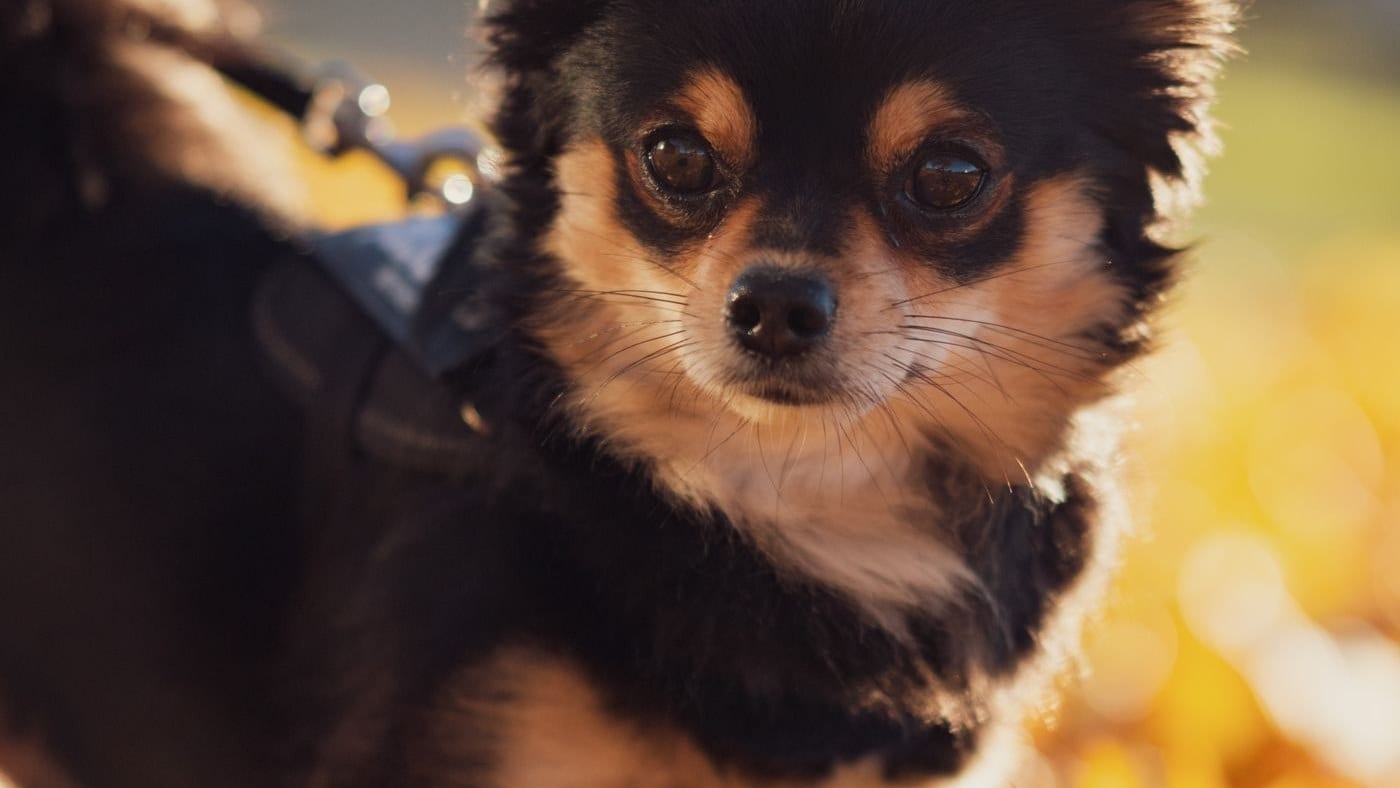
Who it suits
Someone who wants a dog with them everywhere. The Chihuahua attaches firmly to one or two people, travels well and needs very little space in a flat.
It does not suit a household with small children. That is not about temperament — it is about physics: a two-kilo dog is easily hurt by a fall from the sofa or by being stepped on. And a Chihuahua defends itself when it is frightened.
Watch out for one thing that almost everybody does. People pick a small dog up instead of dealing with the situation. The Chihuahua then learns that one bark at anything unpleasant puts it in the air. That is where the reputation for a nervous, barking breed comes from — the temperament is not inborn, it is taught.
What it looks like
- Height: the standard does not specify height; usually 15–23 cm
- Weight: 1.5–3 kg; dogs under 1.5 kg are not eligible for breeding under the standard
- Coat: two varieties — smooth and long, judged equally
- Colour: any, except merle, which is outside the standard
- Lifespan: often 13–17 years
The head is apple-shaped and often has a molera — an incomplete fusion of the skull bones. It is permitted in Chihuahuas but should shrink with age. An open molera in an adult means the head is more vulnerable to injury.
There is no such thing as a teacup Chihuahua. It is a sales word for a dog below healthy weight — and such a dog has a markedly higher risk of hypoglycaemia, fractures and heart problems. Paying a premium for one is paying for a shorter life.
How much exercise it needs
Half an hour to an hour a day is enough, and it does not have to be in one go. A Chihuahua will run around indoors by itself, but it needs to go out for the smells and the encounters, not for fitness.
It copes badly with cold — short coat, small body mass. A coat is a practical item for this breed, not an indulgence.
Training and the first months
- Treat it like a dog. Rules, recall, walking on a lead. Everything you would teach a shepherd dog.
- Do not pick it up when meeting another dog or a stranger. Lifting confirms the fear.
- Socialisation from the start — the Chihuahua is naturally reserved with strangers, and without early experience it becomes a dog that is afraid of everything.
- A harness instead of a collar. The windpipe is weak in small breeds and pressure on the throat does it no good.
Feeding
An adult eats roughly 40–80 g of dry food a day depending on weight, in two meals. At two kilos of body weight an extra treat makes an enormous difference — a piece of sausage is, proportionally, a full meal.
Puppies must eat often. Small breeds have few reserves, and hypoglycaemia — a drop in blood sugar — shows as sleepiness and trembling. Up to six months of age, feed three or four times a day.
Teeth are a weak point. Tartar builds up quickly, milk teeth often fail to fall out and the adult teeth are then pushed out of line. A dental check before the first birthday is sensible.
Common health problems
- Patellar luxation — a slipping kneecap. The commonest orthopaedic problem in the breed.
- Tracheal collapse — a dry, honking cough, worse with pressure from a collar and with excitement.
- Hypoglycaemia in puppies — low blood sugar; in very small individuals it remains a risk in adulthood.
- An open molera — a soft spot on the skull that persists in some dogs.
- Heart defects, particularly mitral valve disease in later life.
- Tartar and early tooth loss — very common.
- Hydrocephalus — rarer, but it does occur in the breed.
This is not a diagnostic guide. A dog that coughs, hops on three legs or is listless belongs at the vet.
Anything else to consider
A Chihuahua lives fifteen years or more — a longer commitment than most large breeds.
And it is a dog that genuinely fits in a handbag. That does not mean it should be in one: a dog that never walks on the ground and never meets other dogs will never learn to be a dog.
Want one?
125 kennels here breed it. Each one has a contact and a link to its page.
Who breeds this
- ... vom SteiglbergLohnsburg ÖSTERREICH, Austria
- ... von Tsu-HaiLeipzig, Germany
- ...vom SonnenfeldMunderfing, Austria
- ...von AlcatrazMunderfing ÖSTERREICH, Austria
- ...von den FellpiratenNordenham, Germany
- ...von der InntalsonnePerach, Germany
- ...Von KaiserbachMattighofen ÖSTERREICH, Austria
- AMAZING DOGSPoland
- AMI GANG TOLI I IGIPoland
- ANGEL STORMPoland
- AR&CAS JUNIORPoland
- BAJKOWE RATLERKIPoland
- BASTET HAPPYPoland
- BEAUTIFUL PUPPIESPoland
- BEZA CHIHUAHUA PALACEPoland
- BEZOWE CIASTECZKAGalewice, Poland
- BIAŁY DIAMENCIKPoland
- BLACK AND WHITE CHIPoland
- BOSSY LADY-HODOWLA CHIHUAHUAPoland
- CHAPO-LANDPoland
- CHI CHI SWEET HOMEPoland
- CHI-KAROPoland
- CHICHILANDPoland
- CHICO-LILIPoland
- CHIHUAHUA NELAPoland
- CHIHUAHUA Z DWORUPoland
- CHIHUAHUA Z ELROMŚwiebodzice, Poland
- CHIQUITA DOGPoland
- CHISWEET DREAMPoland
- CHIVIOLIPoland
- CHOCO LITTLE CHIPoland
- CISOWA OSTOJAPoland
- CRISTAL DOGSPoland
- CZARNA MUZAPoland
- D&N DIAMENTOWAPoland
- DIAMENTOWA EKIPA-DIAMOND TEAMPoland
- DIAMENTOWA ŻELKAPoland
- DOGS GARDENPoland
- DOMEK KOCHANYCH URWISÓWPoland
- DOMEK ZOO-MOCNE TLYTYPoland
- DUENDECITOSPoland
- EL GRINGOSPoland
- EMILOVEPoland
- ENAMORADO DE LOS CHIHUAHUASPoland
- EUFORIAPoland
- funny bouncing LoverDreisen, Germany
- Gina‘s Angels...Ettlingen, Germany
- GRAND MASTER-WOJNITYPoland
- GREMLINKIPoland
- HAPPY CHI DOGPoland
- HAPPY HOME PUPPIES CHIHUAHUAPoland
- HIARYSPoland
- HODOWLA TOKYOPoland
- HODOWLA TOMKAPoland
- HODOWLA ZAKRĘCONEGO OGONKAPoland
- IGNASIAK-WOJTCZAKPoland
- KARMELOWA KRAINAPoland
- KASZUBSKA MAFIAPoland
- KINGSIZE JKFPoland
- KOSOGŁOSPoland
- Kujawski Czar FCIBydgoszcz, Poland
- LAMILLOUPoland
- LAWENDOWY ZAKĄTEKPoland
- LEMARCHIPoland
- LOVELY DOGSPoland
- MAŁE GWIAZDYPoland
- MAŁE JEST PIĘKNEWołczyn, Poland
- MAŁE LALECZKIPoland
- MAMATITAPoland
- MAYAN GOLDEN DOGSPoland
- MEKSYKAŃSKIE SKRZATYPoland
- MEXICO CHIHUAHUA & CATPoland
- MICHUCHIPoland
- Mini Bullchi Gang FCIBydgoszcz, Poland
- MINI DIAMENTYPoland
- MINI DOGPoland
- MINI GOLDPoland
- MINI KLANPoland
- MINI TESOROPoland
- MOJA PASJAPoland
- MOTLEY DREAMSPoland
- MY LITTLE CHIPoland
- MY LOVEPoland
- Olbrzymie Serce [SZCZENIAKI 2 suki - 17.04.2026Bydgoszcz, Poland
- OLHA TMPoland
- Patatas PeludasBydgoszcz, Poland
- PEPINOPoland
- PEREŁKI Z NAD ŚWIDRAPoland
- PERROS PEKENIOSPoland
- PETIT AMOURPoland
- POD DĘBEMPoland
- POD SZNYDZIELNIĄPoland
- POLICKIE MIKRUSYPoland
- PRUSZKOWSKIE SŁODZIAKIPoland
- PSIE EKLERKIPoland
- PUCHATY DOMEKPoland
- PURPUROWE SERCAPoland
- RANCHO CANCUNPoland
- Ranczo ŻmigródkiBydgoszcz, Poland
- REINITA TESORO MIOPoland
Showing the first hundred. The rest are in the breeder directory.
Breeders by region
The number shows how many breeders in the region keep this breed.
- dolnośląskie (Poland)32
- mazowieckie (Poland)14
- wielkopolskie (Poland)14
- łódzkie (Poland)8
- zachodniopomorskie (Poland)8
- kujawsko-pomorskie (Poland)6
- pomorskie (Poland)5
- małopolskie (Poland)4
- opolskie (Poland)4
- śląskie (Poland)4
- lubuskie (Poland)3
- podkarpackie (Poland)3
- Sachsen (Germany)2
- świętokrzyskie (Poland)2
- Baden-Württemberg (Germany)1
- Bayern (Germany)1
- Niedersachsen (Germany)1
- Oberösterreich (Austria)1
- podlaskie (Poland)1
- Rheinland-Pfalz (Germany)1
Breeders of this breed also keep
From the blog
- How to report animal crueltyA dog on a short chain with no water. A cat shut in an empty flat. Most people see something like this once and do not know who to call — and by the time they find out, they have talked themselves out of it. This guide is here so that does not happen.
- Adopting from a shelter: how it really worksFrom the first enquiry to the first week at home. Why the shelter asks so many questions, what a home check is for, and what to expect in the first three weeks.
- What the first year with a dog or cat really costsEveryone budgets for food and a bed. What breaks the budget is one item nobody expects — and costs that are not measured in money at all.