How to report animal cruelty
· By pawfie
A dog on a short chain with no water. A cat shut in an empty flat. Most people see something like this once and do not know who to call — and by the time they find out, they have talked themselves out of it. This guide is here so that does not happen.
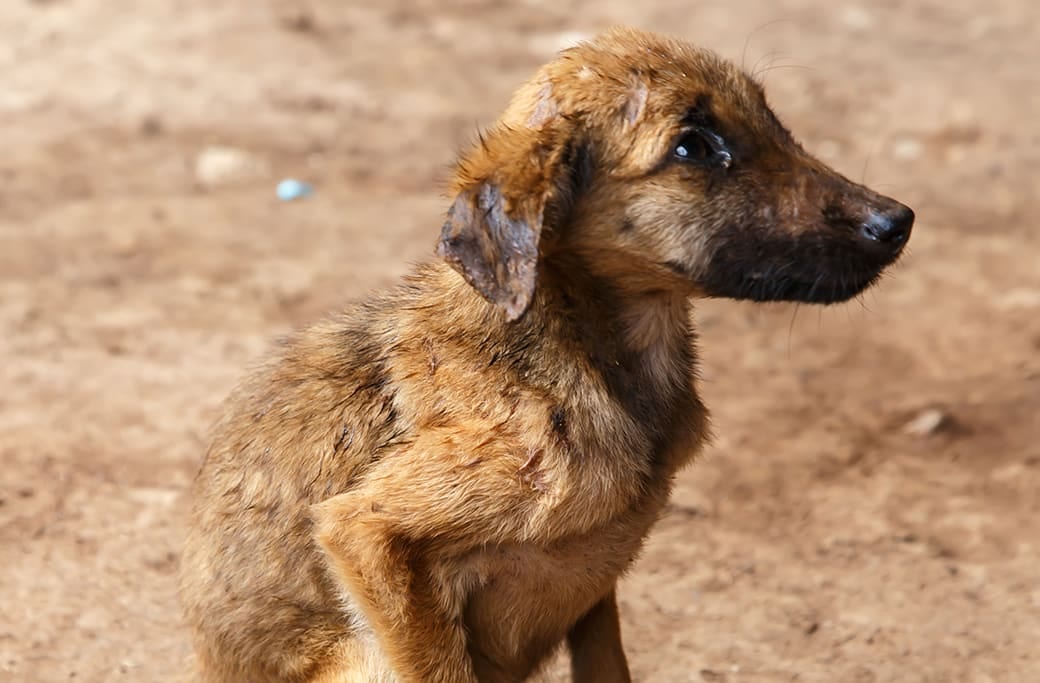
Suspected cruelty goes unreported for two reasons. First, it is unclear where it belongs — police, vet, council, a charity? Second, nobody wants to get involved, because it is almost always a neighbour. The result is always the same: by the time it is sorted out, a week has passed and the animal is still where it was.
This is a practical guide, not legal advice. The details of who to call differ by country; the principles do not.
First, one question: is the animal in danger right now?
If it is — shut in a hot car, obviously injured, or being hurt in front of witnesses — call the police on the emergency number: 999 in the UK, 112 or 999 in Ireland, 112 anywhere in the EU. The police can act immediately and do not have to wait for any procedure. This is the one situation in which it makes sense to call the police first.
In every other case the police will pass the report on anyway, so calling them first saves no time.
Where the report belongs when it is not a matter of minutes
- England and Wales: the RSPCA cruelty line, 0300 1234 999. Its inspectors investigate and work with the police.
- Scotland: the Scottish SPCA animal helpline, 03000 999 999. Its inspectors have statutory powers.
- Northern Ireland: the animal welfare officers of your local council for pets, and DAERA for farm animals.
- Ireland: the ISPCA, a local SPCA or the Gardaí.
- Elsewhere in Europe: the local veterinary authority or the municipal office responsible for animal welfare. It assesses the animal, can order improvements and can remove it.
Animal charities and shelters help with experience and often have the shortest route to the authorities — but outside the UK they usually cannot intervene themselves. The decision rests with the authority.
What to prepare before you call
A report that can be investigated contains four things:
- Where. The exact address, or a description a stranger could use to find the place.
- When. Date and time. And above all: is this a one-off, or a situation that has lasted weeks?
- What can be seen. Facts, not judgements. “The dog is on a chain about a metre long, with no kennel, and the bowl is empty” is usable. “The owner is a horrible person” is not.
- Your contact details. Why is explained below.
Photos or video help, but only ones taken from somewhere you are allowed to be — the street, the pavement, your own property.
You can stay anonymous, but think about it
An anonymous report will be accepted and can be investigated. With a name and a phone number, though, it is handled differently: the investigator can ask about things the description did not make clear, and can tell you at the end how it turned out. With an anonymous report you learn nothing.
If you are worried the neighbour will find out, ask directly how your name will be handled. That is a fair question, and you are entitled to ask it beforehand.
Four things that make it worse
Do not go onto someone else’s property. Not for a photo, not to give the dog water. Evidence gathered that way can be challenged, and you end up being the one who broke the rules.
Do not confront the owner. After a row the animal disappears into a shed or to relatives, and the inspection finds nothing.
Do not take the animal. However it looks. Only the authorities may remove it.
Do not go to social media first. A post that spreads rarely helps: the owner gets time to prepare, the authority spends its time answering hundreds of calls instead of working, and if the situation turns out to be different from how it looked, someone who did not deserve it pays the price.
What happens next
There will be an inspection. Depending on what is found, it can end with an order to put things right within a deadline, a fine, or removal of the animal. Serious cases go to prosecution, because animal cruelty is a criminal offence across Europe, not just a minor infringement.
Expect it to be slow, and expect not to hear straight away. The inspection takes place without you and is not announced in advance.
When nothing happens
Report it again, this time in writing — by email with a date, or by letter. A written report carries more weight than a phone call, because it leaves a trail.
If that does not help either, go to the next level of authority. And if an animal is in immediate danger, go back to the first section: that is a job for the police.
And finally, the uncomfortable part
Not every report ends with the animal being removed. Many situations that look bad from outside turn out, on inspection, to be within the law — and that is infuriating. Even so, nobody can step in where nobody knows there is a problem.
A report that led nowhere was therefore not wasted. The wasted one is the report nobody made.
From the blog
- Dog microchipping in Europe: the rules country by countryAcross most of Europe a dog must now be microchipped and registered in a national database, and the EU has agreed to make that universal for all dogs and cats. The details — deadlines, who registers the dog, fines — still differ by country. Here is what applies in the Czech Republic, Slovakia, Austria, Germany and Poland.
- Adopting from a shelter: how it really worksFrom the first enquiry to the first week at home. Why the shelter asks so many questions, what a home check is for, and what to expect in the first three weeks.
- What the first year with a dog or cat really costsEveryone budgets for food and a bed. What breaks the budget is one item nobody expects — and costs that are not measured in money at all.