Cavalier King Charles Spaniel
Gentle, affectionate and without a trace of aggression — one of the best family dogs you can get. But it carries two inherited conditions so widespread that with this breed, choosing the breeder matters more than anything else.
- Species:
- dog
- Origin:
- United Kingdom
- Breeders here:
- 91
Who it suits
Almost anyone who wants a dog close by. The Cavalier is one of the gentlest breeds there is: patient with children, friendly to strangers, no trouble with other dogs. It will never be a guard dog.
It is a companion dog in the original sense — bred to sit with people. It wants to be in the same room as you and takes being left alone badly.
It does not suit a household that is empty all day. And it does not suit anyone unwilling to deal with health: that is what the second half of this article is about.
What it looks like
- Height: 30–33 cm at the withers
- Weight: 5.4–8 kg
- Coat: long, silky, slightly wavy, with feathering on the ears, legs and tail
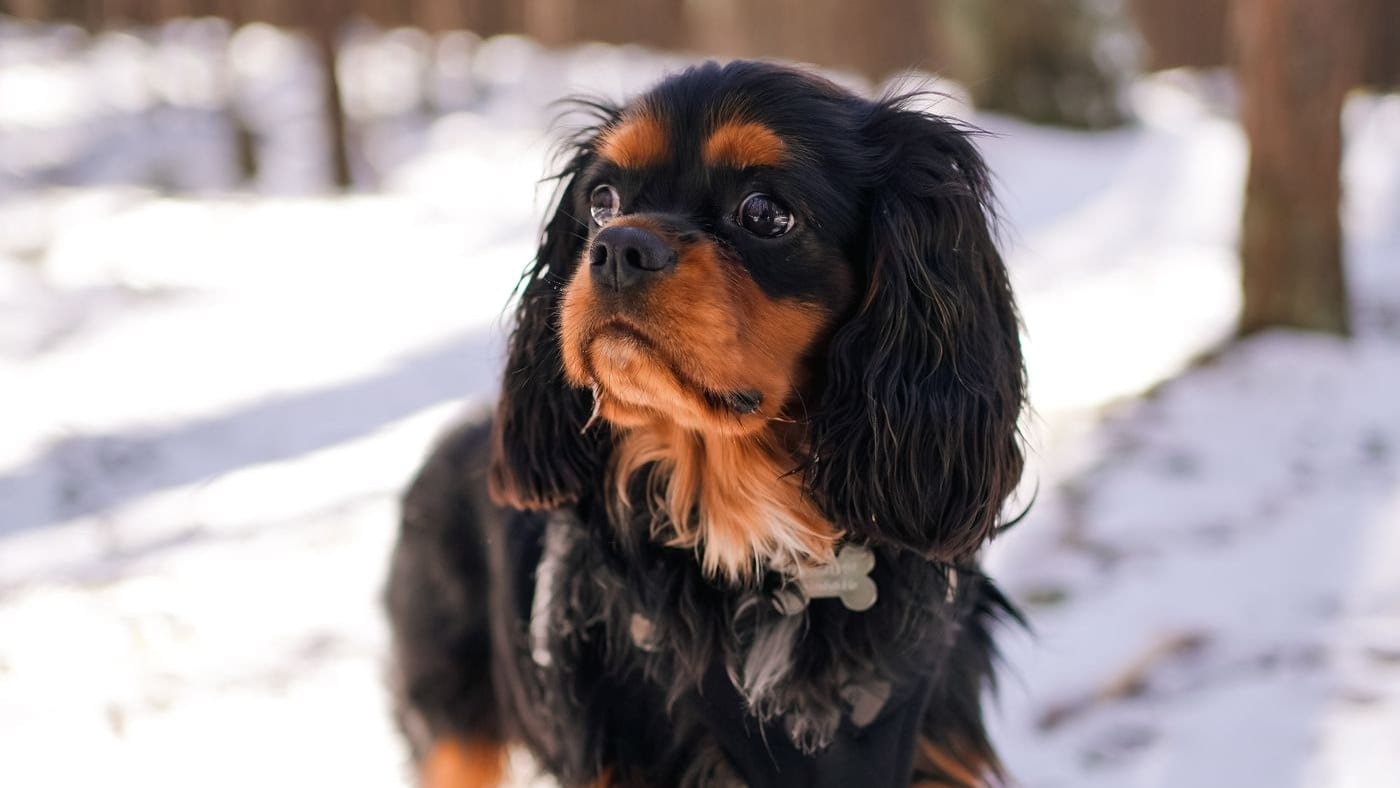
- Colours: four recognised — Blenheim (chestnut and white), tricolour, black and tan and ruby (whole chestnut)
- Lifespan: usually 9–13 years
The King Charles Spaniel is a different breed, not a variety. It is smaller, with a flatter face and a shorter nose. The Cavalier has a longer muzzle and a less domed head.
How much exercise it needs
An hour a day split into two or three walks is enough. A Cavalier will happily go further if you do, and is just as happy to stay home.
It can manage hill walking or a quiet flat — but if the dog has a heart murmur, the level of exercise is a question for the vet, not for guesswork.
Coat care
Brush two or three times a week. Mats form mainly behind the ears and in the armpits; the long feathered ear is the first place to tangle.
Trim the hair between the pads. The breed is not clipped — the coat is meant to grow naturally.
A drop ear does not ventilate well, so ear infections are common. A weekly check is enough.
Feeding
An adult eats roughly 120–200 g of dry food a day in two meals. The breed puts on weight easily, and in a dog with a heart defect every extra kilo is a direct burden.
You should be able to feel the ribs. Treats count towards the daily ration.
Health — and why it matters more here than usual
The Cavalier is a beautiful, gentle dog with two serious inherited problems that are widespread in the population. That is not a reason to avoid the breed; it is a reason to choose a breeder by their health testing rather than by price.
- Myxomatous mitral valve disease (MVD) — a heart condition. It affects a large part of the breed and appears earlier in Cavaliers than in other breeds, sometimes by five years of age. It shows first as a murmur, later as coughing and tiredness. Both parents should have been heart-tested by a cardiologist, and breeding should come from lines where the murmur appears late.
- Syringomyelia and Chiari-like malformation — the back of the skull is too small for the brain and fluid-filled cavities form in the spinal cord. It shows as scratching at the neck without contact, pain and sensitivity around the head. It is diagnosed by MRI.
- Patellar luxation — a slipping kneecap.
- Eye conditions — dry eye, cataract, retinal dysplasia.
- Ear infections — a consequence of the ear shape.
What to ask the breeder: whether both parents were heart-tested by a cardiologist and at what age, whether the line is MRI-scanned for syringomyelia, and how old the ancestors were when a murmur first appeared. A good breeder answers without hedging — this is a breed where honest breeding shows up in exactly these answers.
This is not a diagnostic guide. Coughing, tiring quickly or scratching at the neck belong at the vet, not on the internet.
Anything else to consider
A Cavalier will keep you in sight all day. Anyone wanting an independent dog will be disappointed; anyone wanting a companion could not choose better.
And expect that with this breed insurance or a savings buffer pays for itself. Cardiology work-ups, heart medication and a possible MRI are not cheap, and the odds of needing them are higher here than in most breeds.
Want one?
91 kennels here breed it. Each one has a contact and a link to its page.
Who breeds this
- ABI&GASTONPoland
- ANDROMEDAPoland
- ANTONINALeszno, Poland
- ARYSTOKRACKIE DAMYPoland
- BAJKAPoland
- BAKARATPoland
- Bonitos companerosReichshof, Germany
- BRZOZOWY ZAKĄTEKPoland
- BURSZTYNOWE OWCZARKIPoland
- CALINECZKAPoland
- Canin ConstelatioBydgoszcz, Poland
- CAVALIER'S HOMEPoland
- CHIARAPoland
- Chlupaté štěstíCzechia
- CRAZY CORNERPoland
- CRAZY DOGSPoland
- CRAZY PUPPYPoland
- Daisy Dream FCICzęstochowa, Poland
- DIAMENTPoland
- DIAMENTOWY RAJPoland
- DIAMOND CHIARAPoland
- DOG MADNESSPoland
- DOGGY LANDPoland
- DOLINA CAVISIPoland
- ELIZABETHPoland
- GOLD RACEPoland
- GROMADKA FELICITYStanowice, Poland
- GROMISZPoland
- HOBBY DOGPoland
- JESSIPoland
- JURAJSKI CAVISIOWY EDENPoland
- JURAJSKIE PSIAKIPoland
- KACPERKOWE PSIAKIPoland
- KALIMERAPoland
- KLEMENTYNKICzęstochowa, Poland
- KOCIEWSKA ZAGRODAPoland
- KOLOROWE PSIAKIPoland
- KOLOROWY DOMEKPoland
- KRÓWKOWA DOLINAPoland
- KUDŁATA ZGRAJAPoland
- LA-BIFANPoland
- ŁACIATA ZGRAJAPoland
- LAGUNAPoland
- Lantana Spirit...Waldhambach, Germany
- ŁASICZKOWE WZGÓRZEPoland
- LAWENDOWE ŁĄKIPoland
- LEŚNA OSTOJAPoland
- LOLLIPOPPoland
- LOVE CHARLESPoland
- LOVING DOGPoland
- MĄKOLAPoland
- MALOWNICZE WZGÓRZAPoland
- MIDNIGHT SKYPoland
- MIMISIOWA DOLINAPoland
- MODRY SKARBPoland
- NAD WARTĄPoland
- NIKI-DOGPoland
- NINEONEL.PLPoland
- NOBLE DOGSPoland
- ORKANOWSKA ZGRAJAPoland
- OSTATNI ZAGONPoland
- PICCOLO BLUPoland
- PILICOWE PUPILEPoland
- Przyjazny PiesBydgoszcz, Poland
- PSIA REZYDENCJAPoland
- PUPPY LANDPoland
- RADOSNY ZAKĄTEK CAVISIPoland
- ROYAL CAVALIERPoland
- ROYAL QUEENSPoland
- RUBIN Z GOSTYNIAPoland
- RUBINOWA ZAGRODAPoland
- RUBINOWE SZCZĘŚCIEPoland
- SEWER-HUSPoland
- ŚLĄSKA GWARAPoland
- SŁODZIACZKIPoland
- SŁONECZNAPoland
- SŁONECZNA DĄBRÓWKAPoland
- SŁONECZNE WZGÓRZEPoland
- SWEET PAPPYPoland
- SZCZĘŚLIWE ŁAPKIPoland
- SZMARAGDY Z BŁĘKITNEJ LAGUNYPoland
- TIBI&TOBIPoland
- VALENTINO SKYPoland
- YOUR DOGPoland
- Z CHABROWEJ ŁĄKIPoland
- Z HENRYKOWAPoland
- Z TALII JOKERÓWPoland
- Z ZIELONEJPoland
- ZAMKOWE WZGÓRZE ROKSIPoland
- ZŁOTY LASPoland
- ZŁOTY ZWIERZPoland
Breeders by region
The number shows how many breeders in the region keep this breed.
- mazowieckie (Poland)21
- śląskie (Poland)19
- wielkopolskie (Poland)15
- łódzkie (Poland)7
- warmińsko-mazurskie (Poland)5
- małopolskie (Poland)4
- podlaskie (Poland)3
- kujawsko-pomorskie (Poland)2
- lubuskie (Poland)2
- opolskie (Poland)2
- podkarpackie (Poland)2
- dolnośląskie (Poland)1
- Jihočeský kraj (Czechia)1
- Nordrhein-Westfalen (Germany)1
- pomorskie (Poland)1
- Rheinland-Pfalz (Germany)1
- świętokrzyskie (Poland)1
- zachodniopomorskie (Poland)1
Breeders of this breed also keep
From the blog
- How to report animal crueltyA dog on a short chain with no water. A cat shut in an empty flat. Most people see something like this once and do not know who to call — and by the time they find out, they have talked themselves out of it. This guide is here so that does not happen.
- Adopting from a shelter: how it really worksFrom the first enquiry to the first week at home. Why the shelter asks so many questions, what a home check is for, and what to expect in the first three weeks.
- What the first year with a dog or cat really costsEveryone budgets for food and a bed. What breaks the budget is one item nobody expects — and costs that are not measured in money at all.