Labrador Retriever
The most recommended family dog — and the most underestimated. It is friendly, quick to learn and tolerant of children, but it is a gundog with an enormous appetite for food and for movement. It becomes the calm household pet only around its third year.
- Species:
- dog
- Origin:
- United Kingdom
- Breeders here:
- 461
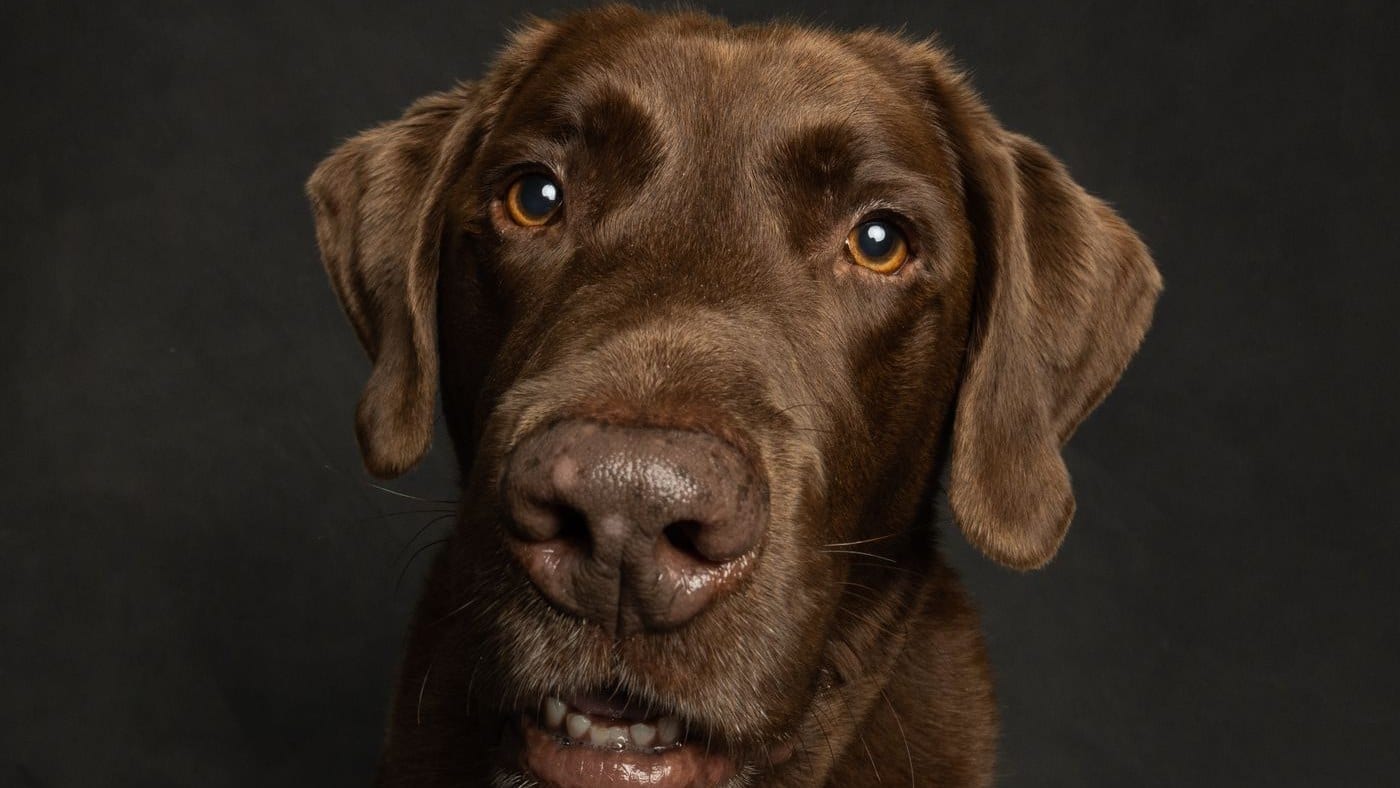
Who it suits
A family that likes being outdoors. The Labrador is friendly to everyone by nature — to children, to strangers and to other dogs — and it will always make a poor guard dog, because it is more likely to welcome an intruder.
It does not suit a home expecting a ready-made calm dog. For the first two or three years it is a large, clumsy puppy that knocks a child over with its tail and cannot put its own brakes on. The reputation as a calm family dog is true, it just starts later than people expect.
What it looks like
- Height: dogs 56–57 cm, bitches 54–56 cm at the withers
- Weight: dogs 29–36 kg, bitches 25–32 kg
- Coat: short, dense and hard, with a water-resistant undercoat
- Colour: black, yellow (from cream to fox red) and chocolate
- Lifespan: usually 10–13 years
There are two identifying features: the otter tail, thick at the base and round, and webbing between the toes. Both come from the original work — retrieving shot duck from water.
Here too there are two lines. The show Labrador is stockier and calmer, the working one is lighter, faster and considerably more demanding to keep occupied. A working line does not belong in a flat with short walks.
How much exercise it needs
At least an hour and a half a day, and not just walking on a lead. The Labrador was bred to carry things all day — retrieving, swimming and scent work satisfy it more than distance does.
It swims naturally, and water is the gentlest exercise there is for it. In an older dog with sore joints it is often the only exercise it still enjoys.
Training and the first months
It learns willingly and fast, because it will do almost anything for food. That makes training enormously easier — and it also means it learns to beg and to steal from the table just as willingly.
- Control of what goes in the mouth, from day one. A Labrador will pick up anything off the ground. Socks, stones and leftovers from the park are the commonest reason Labradors end up in surgery.
- Not jumping up at people is dealt with while the dog weighs ten kilos, not thirty.
- The recall should be trained before adolescence arrives at around eight months. Until then the puppy follows you by itself; after that the world becomes interesting.
Feeding
An adult eats roughly 300–400 g of dry food a day in two meals. With a Labrador, though, the issue is not the amount — it is discipline.
The breed has a demonstrably higher tendency to obesity: a proportion of dogs carry a genetic change that stops them feeling full. That means the dog cannot eat until it has had enough, because that moment never comes. You have to weigh the food, count treats towards the daily ration and hold firm.
Excess weight is the main health problem in the Labrador and it makes everything else worse: joints, heart, breathing and lifespan. The ribs must be possible to feel with your hand.
Common health problems
- Hip and elbow dysplasia — inherited. The parents must have scored radiographs.
- Progressive retinal atrophy — gradual loss of sight. A DNA test exists.
- Obesity and the arthritis that follows — the commonest problem in the breed and the one you can influence most.
- Gastric torsion — an acute, life-threatening emergency; keep the dog quiet after meals.
- Ear infections — a drop ear and a love of water go badly together; dry the ears after swimming.
- Exercise-induced collapse — rarer, but tested for in working lines.
This is not a diagnostic guide. If you can see something wrong with the dog, it belongs at the vet, not on the internet.
Anything else to consider
The Labrador sheds all year round and heavily twice a year — short hair works itself into fabric worse than long hair does.
And expect a good deal to be destroyed in the first two years. That is not a training failure, that is a Labrador.
Want one?
461 kennels here breed it. Each one has a contact and a link to its page.
Who breeds this
- ... vom Gestüt PalmbergAmt Wachsenburg, Germany
- ... vom HaselgrundSteinbach-Hallenberg, Germany
- ... von LabrakadabraBad Rodach, Germany
- ...auf der WelleAlfeld (Leine), Germany
- ...aus dem HabichtsreichWettstetten, Germany
- ...aus der DüsselbandeDüsseldorf, Germany
- ...Fellow for LifeStolberg, Germany
- ...from Grannies GardenKrefeld, Germany
- ...from soul hunter homeAsendorf, Germany
- ...Hertz vom BirkhofRodenbek, Germany
- ...hunters lifeBreisach am Rhein, Germany
- ...Hunters Luck of RavenKierspe, Germany
- ...Indra vom BössershofGoch, Germany
- ...little Dragon from Fire FighterNeuss, Germany
- ...of Black Pearl's TreasureIsernhagen, Germany
- ...of Golden HeathlandRotenburg, Germany
- ...of Hunter's PassionBad Laer, Germany
- ...of HunterstoneMossautal, Germany
- ...of Hunting IlaAnderlingen, Germany
- ...of Mayfield ManorNiederzier, Germany
- ...Of Meadow And MoorDreschvitz, Germany
- ...of MillraceSpringe, Germany
- ...of Mossdeep ValleyWutha-Farnroda, Germany
- ...of Mountain Forest GladeDelbrück, Germany
- ...of Nature's GardenWadersloh, Germany
- ...of the little rascals gangKorschenbroich, Germany
- ...ut de MarschlannenHamburg, Germany
- ...Ut Ole LandNeuenkirchen, Germany
- ...van d' Münkeboer MöhlenSüdbrookmerland, Germany
- ...van't Westerender HoechtGroßheide, Germany
- ...Vita's HopeBad Soden, Germany
- ...vom AhrenhorstSendenhorst, Germany
- ...vom AischbogenHöchstadt a.d.Aisch, Germany
- ...vom alten MilitärbahnhofJüterbog, Germany
- ...vom alten Trappisten KlosterRosendahl, Germany
- ...vom Altendorfer DiekNordhorn, Germany
- ...vom AltusknippMechernich, Germany
- ...vom AzonehofOranienburg, Germany
- ...vom BeerenbuschRadibor, Germany
- ...vom Berdumer HofWittmund, Germany
- ...vom Bether RoggenkampCloppenburg, Germany
- ...vom Boitiner SteintanzBaumgarten, Germany
- ...vom BruckersbergGiengen an der Brenz, Germany
- ...vom CzornebohHochkirch - Bukecy, Germany
- ...vom Delbrücker LandDelbrück, Germany
- ...vom Eichkopf im TaunusWeilrod, Germany
- ...vom Eiderstedter LandKatharinenheerd, Germany
- ...vom FöhrenbaumStadtbergen, Germany
- ...vom Forst KlövensteenPinneberg, Germany
- ...vom Forsthaus RehwinkelSpringe, Germany
- ...vom freien BlickOtzberg, Germany
- ...vom FuchsschlagWonfurt, Germany
- ...vom GänsemoorBerumbur, Germany
- ...vom GänseseeHamburg, Germany
- ...vom Grünen TurmRavensburg, Germany
- ...vom GüldenfeldRauenberg, Germany
- ...vom Gut EntenpfuhlFrankfurt am Main, Germany
- ...vom Gut WellersenHann. Münden, Germany
- ...vom GutenbachOberkochen, Germany
- ...vom GutshofsbergRastdorf, Germany
- ...vom Haaßler HofAnderlingen, Germany
- ...vom Hasetaler ForstLöningen, Germany
- ...vom HeidkrugDeinste, Germany
- ...vom HelkenbruchGrande, Germany
- ...vom Henstedter FeldHenstedt-Ulzburg, Germany
- ...vom Heveser HoffBückeburg, Germany
- ...vom Himmeroder WallRheinbach, Germany
- ...vom HofesaatNordhorn, Germany
- ...vom Hohen WindlandRosenheim, Germany
- ...vom Idsinger KnickWalsrode, Germany
- ...vom Immenstedter WaldImmenstedt, Germany
- ...vom Keien FennDüsseldorf, Germany
- ...vom Kleinen Hülser BergKrefeld, Germany
- ...vom Klukkert-HafenNordhorn, Germany
- ...vom KnaakenortTodendorf, Germany
- ...vom KumpelsgartenAlfter, Germany
- ...vom LaupautalQuerenhorst, Germany
- ...vom Lohner BrookStadtlohn, Germany
- ...vom LumerichWershofen, Germany
- ...vom Lüttjen HusWaldkirch, Germany
- ...vom Magdalaer LandDöbritschen, Germany
- ...vom MeerankerBrunsbek, Germany
- ...vom MitteldeichHamburg, Germany
- ...vom NuthefließLuckenwalde, Germany
- ...vom Ochtruper VennOchtrup, Germany
- ...vom OderhangBad Lauterberg, Germany
- ...vom Oemberger MoorMülheim an der Ruhr, Germany
- ...vom Oestricher LandAhlen, Germany
- ...vom OraniendeichKleve, Germany
- ...vom OrtenbergFronhausen, Germany
- ...vom OsterbachtalSchermbeck, Germany
- ...vom OttiliensteinSuhl, Germany
- ...vom Perflinger WeiherRunding, Germany
- ...vom Rantzauer ForstNorderstedt, Germany
- ...vom RockenhofBarsbüttel, Germany
- ...vom SalgenholzBraunschweig, Germany
- ...vom SchippelsmoorHamburg, Germany
- ...vom SchledenhofFilsum, Germany
- ...vom SchmiedekampBevern, Germany
- ...vom Schnelter BruchLastrup, Germany
Showing the first hundred. The rest are in the breeder directory.
Breeders by region
The number shows how many breeders in the region keep this breed.
- Nordrhein-Westfalen (Germany)98
- Niedersachsen (Germany)74
- Schleswig-Holstein (Germany)38
- Bayern (Germany)33
- Baden-Württemberg (Germany)29
- Hessen (Germany)24
- Rheinland-Pfalz (Germany)14
- Brandenburg (Germany)13
- mazowieckie (Poland)10
- wielkopolskie (Poland)9
- małopolskie (Poland)7
- Mecklenburg-Vorpommern (Germany)7
- Thüringen (Germany)5
- Berlin (Germany)4
- Sachsen-Anhalt (Germany)4
- śląskie (Poland)4
- świętokrzyskie (Poland)4
- warmińsko-mazurskie (Poland)4
- Sachsen (Germany)3
- Bremen (Germany)2
Breeders of this breed also keep
From the blog
- How to report animal crueltyA dog on a short chain with no water. A cat shut in an empty flat. Most people see something like this once and do not know who to call — and by the time they find out, they have talked themselves out of it. This guide is here so that does not happen.
- Adopting from a shelter: how it really worksFrom the first enquiry to the first week at home. Why the shelter asks so many questions, what a home check is for, and what to expect in the first three weeks.
- What the first year with a dog or cat really costsEveryone budgets for food and a bed. What breaks the budget is one item nobody expects — and costs that are not measured in money at all.