Siberian
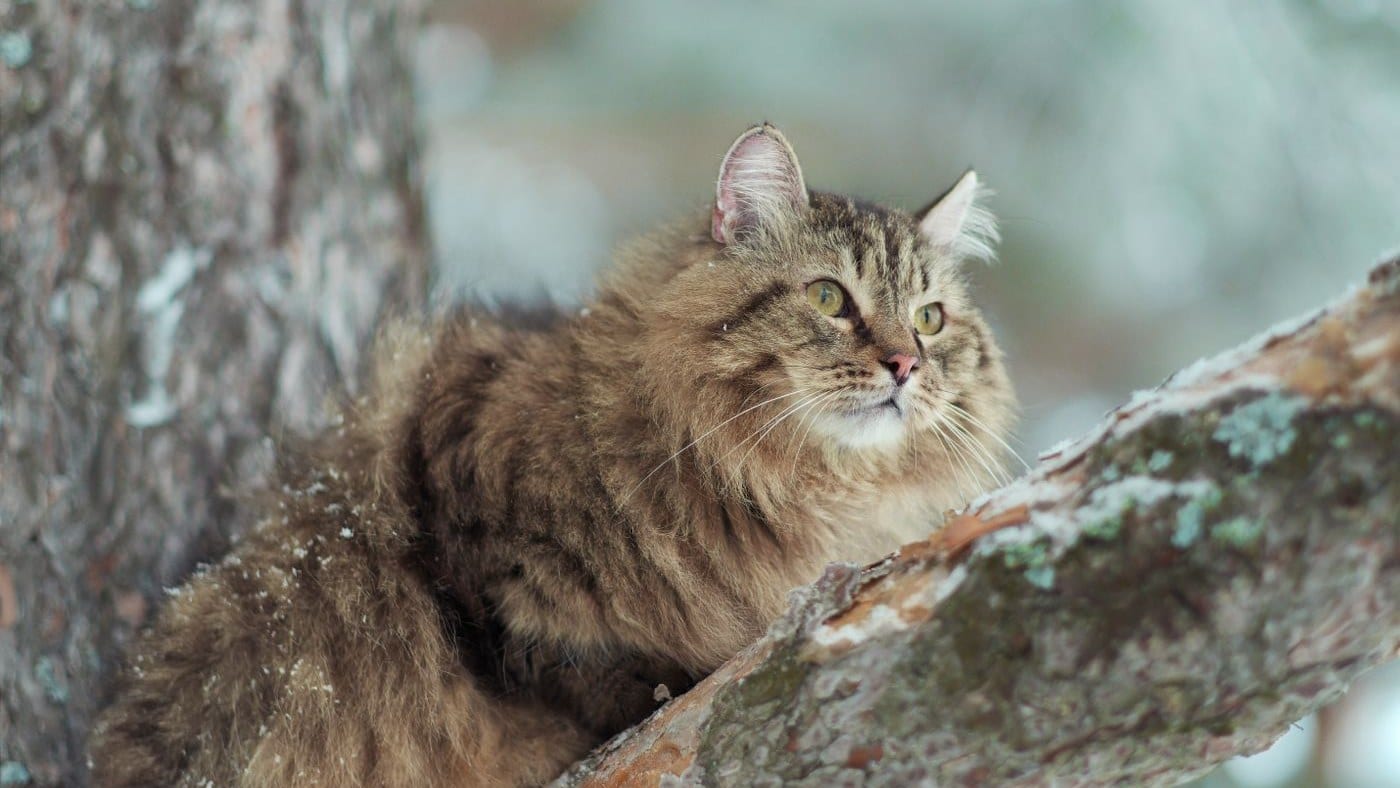
A sturdy semi-longhaired cat from the Russian countryside — level-headed, agile and surprisingly sociable. It is the breed people recommend to allergy sufferers, and there is some truth in that and some myth.
- Species:
- cat
- Breeders here:
- 100
Who it suits
A household that wants a cat with character. The Siberian is even-tempered, affectionate without being pushy, and unlike the quieter breeds it still plays as an adult.
It developed naturally in the Russian climate rather than in a breeding programme — hence the solid build, the dense coat and health that tends to be above average. It is agile, likes to climb and jumps high.
It usually attaches itself to the whole family rather than to one person, and gets on well with children and with dogs.
The truth and the myth about allergies
This is the reason many people choose the breed, so it is worth stating precisely.
Allergy is not caused by hair but by a protein called Fel d 1, which the cat secretes in saliva and skin oils and spreads through its coat while grooming.
Siberians have repeatedly been measured as producing substantially less Fel d 1 in some individuals than an average cat. That is not a property of the breed as a whole, though — it is a property of the individual cat, and it varies even between littermates.
What that means in practice: anyone with an allergy should not buy a kitten on trust. Spend time with the specific cat at the cattery and decide on that basis. The claim that Siberians are hypoallergenic is not true.
What it looks like
- Weight: males 6–9 kg, females 4–6 kg
- Body: strong, muscular, with large paws and a broad chest
- Coat: semi-long and triple — guard hairs, awn hairs and undercoat; a dense ruff and a bushy tail
- Colour: almost every colour is accepted, including colourpoint, which in this breed is called the Neva Masquerade
- Lifespan: usually 12–16 years
It matures slowly — full size comes at three to five years old.
Coat care
Brush twice a week, daily while moulting. The dense triple coat comes out in quantity in the spring moult, and clumps of it literally drop.
Mats form behind the ears, in the armpits and on the hind legs. The cat does not need bathing — the coat is naturally water-resistant.
Feeding
An adult needs roughly 60–90 g of dry food a day depending on weight, or the equivalent in wet food. The Siberian is active, so obesity is less common than in calmer breeds — but it should still be fed in measured meals.
It grows for a long time, so kitten food is worth continuing for longer than in small breeds.
Common health problems
The Siberian is among the more robust breeds, because it arose by natural selection. That does not mean testing is unnecessary.
- Hypertrophic cardiomyopathy (HCM) — thickening of the heart muscle; breeding cats should have a heart scan.
- Polycystic kidney disease (PKD) — less common than in Persians, but tested for by DNA.
- Pyruvate kinase deficiency (PK-def) — an inherited anaemia with a DNA test available.
- Hairballs during moulting — with a triple coat this is a routine problem.
This is not a diagnostic guide. A cat breathing rapidly, losing weight or suddenly listless belongs at the vet.
Anything else to consider
The Siberian is a jumper. High shelves, wardrobes and the top of the fridge are no obstacle — adapt the flat to the cat rather than the other way round.
And expect hair. A triple coat means the spring moult is noticeable throughout the flat; brushing is the only defence.
Want one?
100 kennels here breed it. Each one has a contact and a link to its page.
Who breeds this
- A BILIONER*PLSzczecin, Poland
- AKSELAND*PLWarszawa, Poland
- AMANITA*PLKrasne k.Rzeszowa, Poland
- BAJKOWY ŚWIAT*PLBielsko-Biała, Poland
- BIAŁA RADOŚĆ*PLGrodzisk Mazowiecki, Poland
- BIAŁE NOCE*PLGorzów Wielkopolski, Poland
- BIAŁE SZALEŃSTWO*PLMietków, Poland
- BIAŁE URWISY*PLSulejówek, Poland
- BIAŁY PUCH*PLZamość, Poland
- BLUE AMP*PLPoland
- BLUE CHELSEA*PLWarszawa, Poland
- CARMENMIA*PLPiechocin, Poland
- CARPHATIAN GRACE*PLSanok, Poland
- CEZARIA*PLStare Babice, Poland
- CHATKA STEFANKA*PLSulechów, Poland
- CICHO-SZA*PLGliwice, Poland
- CUD NATURY*PLAleksandrów Łódzki, Poland
- CUDA SYBERII*PLTopola Mała, Poland
- CZARUJĄCE OCZKA*PLOleśnica, Poland
- D - 85244 RöhrmoosRöhrmoos, Germany
- DIVINE LIFE*PLWrocław, Poland
- DUMA ELIZY*PLSępólno Krajeńskie, Poland
- Eremitage PalaceHamburg, Germany
- FledermaustigerBassum, Germany
- Flying'sStuttgart, Germany
- FrostpineSouth San Francisco (USA), Germany
- Frozen silver'sArnbach, Germany
- FurryWoodsHolzgerlingen, Germany
- FUTROPOLIS*PLWarszawa, Poland
- GOLDEN WHITE*PLWarszawa, Poland
- GUCIAKI*PLSztutowo, Poland
- HOUSE OF SIBERIAN*PLPoland
- IRESA*PLOleśnica, Poland
- JUTRZENKA*PLNowa góra, Poland
- KARMELOVE*PLBydgoszcz, Poland
- KOCI PUSZEK*PLDaleszyce, Poland
- KOCIA DYNASTIA*PLBełchatów, Poland
- LAURKOWO*PLZgierz, Poland
- LAZUROWA SŁODYCZ*PLChełm, Poland
- LUCYNKOWO*PLPiaseczno, Poland
- MAŁE BIAŁE*PLWarszawa, Poland
- MAŁECUDA*PLOstrów Wielkopolski, Poland
- MODROOKA*PLLubawa, Poland
- Moony Mountain'sSonnenbühl, Germany
- MRÓZ I PAZUR*PLŁódź, Poland
- MUZURU*PLWarszawa, Poland
- Neva CatWiesbaden, Germany
- NowosibisRödinghausen, Germany
- of MikasisShineNeuenbürg, Germany
- OSTRE PAZURKI*PLSłupsk, Poland
- PIEPRZ I WANILIA*PLKonstantynów Łódzki, Poland
- POKUSA*PLŁódź, Poland
- Polar NevaBerlin, Germany
- PRZYTULAŚKI KAŚKI*PLOrchowo, Poland
- PUSZYSTE OGONKI*PLChoszczno, Poland
- RAJSKI ŻYWIOŁ*PLSochaczew, Poland
- Remmy'sKöln, Germany
- RhoentaigaKalbach, Germany
- ROSA VERONA*PLLublin, Poland
- ROYAL FROSTPoland
- Royal Pink PawsFurth, Austria
- ROZRABIAKI*PLRogów, Poland
- Serafina Royal'sGelsenkirchen, Germany
- Siberian Jeweller'sVillingen-Schwenningen, Germany
- SŁODKA CHWILA*PLTomaszów Mazowiecki, Poland
- SŁODKIE OCZKA*PLKozłów Biskupi, Poland
- SŁODZIAKOWOPoland
- SMAGOWICZPoland
- ŚNIEŻNA PERŁA*PLKsiążenice, Poland
- SO MUCH LOVE*PLRzeszów, Poland
- SOFT COLD*PLKielce, Poland
- SWOJĄ DROGĄ*PLZawiercie, Poland
- TULIMRUCZKI*PLWojnowice, Poland
- TYGRYSY ZE STOLICY*PLKonstancin-Jeziorna, Poland
- UNIQUE BLUE*PLGrodzisk Mazowiecki, Poland
- vom blauen BlickBannewitz, Germany
- vom FellnasenwaldSchorndorf, Germany
- vom LöwenreichFischingen, Germany
- vom ZarenschlossTimmaspe, Germany
- von den 3 kleinen EichenNeuenhagen b. Berlin, Germany
- von den Einstein CooniesFredersdorf-Vogelsdorf, Germany
- von den Einstein forrest catsFredersdorf-Vogelsdorf, Germany
- von den EldetatzenEldena, Germany
- von den NordlichtperlenPinneberg, Germany
- von der BurgfeeZusmarshausen, Germany
- von der LöwenburgBad Honnef, Germany
- von der SilberstadtFreiberg, Germany
- von DorieBohmte, Germany
- von Krasa TajgiDinkelscherben, Germany
- von NiederrheinTönisvorst, Germany
- von VogelbachDachsberg-Vogelbach, Germany
- von WaldschönBad Dürrheim, Germany
- WildTigersHorb am Neckar, Germany
- Z KARPAT*PLPuławy, Poland
- Z ROKOLI*PLKarczew, Poland
- ZIELONE OKO*PLKoluszki, Poland
- ZŁOTA SYBERIA*PLStare Budy Radziejowskie, Poland
- ZŁOTE TYGRYSY*PLPoznań, Poland
- ZORZA ŁAPEK*PLWarszawa, Poland
- ZWYCIĘZCA*PLBańska Niżna, Poland
Showing the first hundred. The rest are in the breeder directory.
Breeders by region
The number shows how many breeders in the region keep this breed.
- mazowieckie (Poland)10
- Baden-Württemberg (Germany)8
- łódzkie (Poland)6
- wielkopolskie (Poland)6
- Nordrhein-Westfalen (Germany)5
- śląskie (Poland)4
- Bayern (Germany)3
- pomorskie (Poland)3
- Brandenburg (Germany)2
- dolnośląskie (Poland)2
- Hessen (Germany)2
- małopolskie (Poland)2
- Niedersachsen (Germany)2
- podkarpackie (Poland)2
- Sachsen (Germany)2
- Schleswig-Holstein (Germany)2
- świętokrzyskie (Poland)2
- Berlin (Germany)1
- kujawsko-pomorskie (Poland)1
- lubelskie (Poland)1
Breeders of this breed also keep
From the blog
- How to report animal crueltyA dog on a short chain with no water. A cat shut in an empty flat. Most people see something like this once and do not know who to call — and by the time they find out, they have talked themselves out of it. This guide is here so that does not happen.
- Adopting from a shelter: how it really worksFrom the first enquiry to the first week at home. Why the shelter asks so many questions, what a home check is for, and what to expect in the first three weeks.
- What the first year with a dog or cat really costsEveryone budgets for food and a bed. What breaks the budget is one item nobody expects — and costs that are not measured in money at all.