Ragdoll
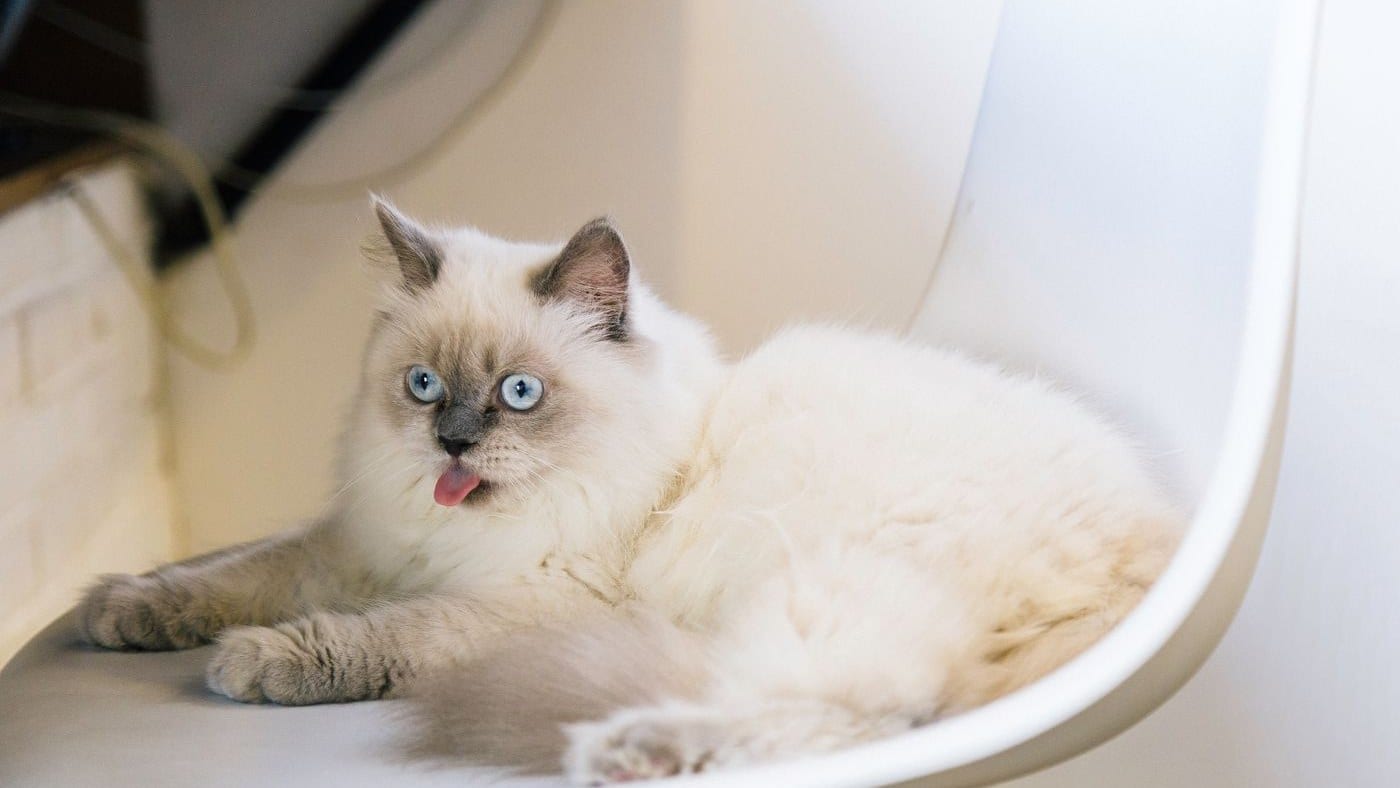
A big, placid cat that lets itself be carried and follows people from room to room. It is named for the way it goes limp when picked up, like a rag doll — and that is exactly why it has to be a cat that stays indoors.
- Species:
- cat
- Breeders here:
- 113
Who it suits
Someone who wants a cat that will genuinely be with them. The Ragdoll is one of the most affectionate breeds there is — it greets people at the door, follows you around the flat and usually allows itself to be picked up without protest.
It is quiet, tolerates children and dogs and does not look for conflict.
That temperament is precisely why it is an indoor-only cat. A Ragdoll does not defend itself, has no fear of cars or of strangers, and usually will not run from danger. Outdoors it does not last long.
It does not suit a home where nobody is in all day — it takes solitude badly. If you are often out, it needs a second cat.
What it looks like
- Weight: males 6–9 kg, females 4–6 kg
- Coat: semi-long, silky, with little undercoat — which is why it mats less than other long-haired breeds
- Colour: always colourpoint — darker ears, mask, legs and tail; the base shades are seal, blue, chocolate and lilac
- Pattern: three variants — colourpoint with no white, mitted with white gloves, and bicolour with an inverted white V on the face
- Eyes: always blue
- Lifespan: usually 12–17 years
Kittens are born white. Colour appears on the ears and paws after the first week, and the cat reaches full depth of colour only at two or three years old. It is still growing until then — the Ragdoll matures slowly.
Temperament and environment
The Ragdoll is calmer and less playful than most breeds, but it does want to play — just not wildly. It does not jump high, so it prefers lower, broad surfaces to narrow shelves near the ceiling.
It needs a scratching post that will take eight kilos and a spot by a window. And because it does not go outside, it matters that it has things to choose between indoors.
Coat care
Brush twice a week, more often when moulting. A coat without much undercoat mats less, but mats still form — behind the ears, in the armpits and in the trousers on the hind legs.
Bathing is not needed. Hairballs are less of a problem than in cats with a dense undercoat, but regular brushing is still the best prevention.
Feeding
An adult needs roughly 60–90 g of dry food a day depending on weight, or the equivalent in wet food.
A calm temperament and a large body mean a tendency to put on weight. A Ragdoll does not tear around the flat, so what it eats it does not burn off. Feed measured meals rather than filling a bowl in the morning.
It grows for a long time — kitten food is worth continuing for longer than in smaller breeds.
Common health problems
- Hypertrophic cardiomyopathy (HCM) — thickening of the heart muscle. The Ragdoll has its own described inherited mutation and a DNA test exists for it. Breeding cats should have both the test and a heart scan.
- Polycystic kidney disease (PKD) — inherited, testable by DNA.
- Urinary stones — more common in this breed; fluid intake and wet food help.
- Obesity — the commonest problem and the easiest to influence.
- Hairballs during moulting.
With a Ragdoll, always ask about testing. Both HCM and PKD can be excluded by DNA, and a good breeder shows the results without being asked.
This is not a diagnostic guide. A cat breathing with its mouth open, straining to urinate or suddenly unable to use its hind legs needs a vet immediately.
Anything else to consider
The Ragdoll is a large cat and needs everything bigger: litter tray, carrier and scratching post. A standard carrier is usually too small for an adult male.
And one thing that repeats with every breed that has a good reputation: where there is demand, breeders without testing appear. A price without papers and without health results is not a bargain.
Want one?
113 kennels here breed it. Each one has a contact and a link to its page.
Who breeds this
- ABRAMKI*PLReda, Poland
- ANTONIO-RAGDOLNOPoland
- BABIS BIBISPoland
- baersbergragdollsKleve, Germany
- BAJKOWE KOCIĘTAPoland
- BineDollsNeuenkirchen, Germany
- Blaues AugeGermany
- BŁĘKITNA PEŁNIA*PLMyślibórz, Poland
- BŁĘKITNE SNY*PLStrzelce Opolskie, Poland
- BLUE CAT PARADISEPoland
- BLUE EYELET*PLBielsko-Biała, Poland
- Blue Saphir DreamsUlm, Germany
- BLUE-EYED DOLLSPoland
- blueeyed banditsMeschede, Germany
- C.A.T.S ARENAPoland
- CAT MERLINPoland
- CATISSIMEPoland
- Cattery von LenitasErftstadt bei Köln, Germany
- CrookWaterDollsEinbeck, Germany
- de la Buena EstrellaFlörsheim, Germany
- DIVINE CHARM*PLOława, Poland
- DIVINE LIFE*PLWrocław, Poland
- DONUM UNIVERSI*PLCykarzew, Poland
- EMERALD MOON*PLWarszawa, Poland
- Faelinis RagdollHallstatt, Austria
- FLUFFY DREAM RAGDOLLSPoland
- FOREST MONSTERS*PLOstrów Wielkopolski, Poland
- from Daleens HeavenRottenburg, Germany
- from Haus MiraHalle(Saale), Germany
- Frozen-RagDresden, Germany
- FULFILMENT*PLDobrzewino, Poland
- FURRY PARADISE*PLKędzierzyn-Koźle, Poland
- GATITOPoland
- GLEDICZIA*PLZgierz, Poland
- GrafenhausenKappel-Grafenhausen, Germany
- HOLLY’S HOUSE*PLWarszawa, Poland
- JOLWITA*PLGdynia, Poland
- Kajika Rags'Hilzingen, Germany
- KASZMIRPoland
- Klein Muh'sUlm, Germany
- KOCI ŚWIAT JULKIPoland
- KOCIA SYMFONIAWierzchowisko, Poland
- KWIAT MAGNOLII*PLSzczecin, Poland
- LavendelroadBremen, Germany
- LAZUROWEOKO*PLNowe, Poland
- Los Mejores RagdollsStruxdorf, Germany
- LUCKY TIGER*PLGrodzisk Wielkopolski, Poland
- MAŁE MRUCZKIPoland
- MARCELINKOWO*PLOstrów Mazowiecka, Poland
- MIAU MIPoland
- MILERINI*PLSmolec, Poland
- MINI KICIA ZOO PLPoland
- Morskie Brysie*PLSerbinowo, Poland
- MRUCZĄCA FRAJDA*PLNysa, Poland
- NAD JEZIORAMI*PLMrągowo, Poland
- NATALIAPoland
- natural diamonds ragdollsKaarst, Germany
- NIEBIESKIE OKOPoland
- NIGHT SKY*PLWoroniec, Poland
- of CallaroseUelzen, Germany
- of Dream FuzziesBurghausen, Germany
- of Dryads WoodArnsberg, Germany
- of Link CastleNauen OT Lietzow, Germany
- of the StoneBoxGeestland, Germany
- OMGrandAnnaPoland
- PRAWDZIWE CUDO*PLLubartów, Poland
- Precious SweetheartsDüren, Germany
- PUCHATE LALECZKIPoland
- PUDIŚPoland
- RAD.DOLINA*PLJarocin, Poland
- Ragdoll of Vienna SpiritWien, Austria
- RAGDOLLE Z WOJSŁAWIAPoland
- RAGDOLLMISTRZPoland
- ragdollsvonderelbingerhoeheMarl, Germany
- RAGDOLOVEWrocław, Poland
- RAGTIME BLUE*PLWarszawa, Poland
- RAINBOW WORLDPoland
- RAMAN BLUE*PLSierakowice, Poland
- Skyway'sLaudenbach, Germany
- SOSNOWY ZAKĄTEKPoland
- Sweet FellowMagdeburg, Germany
- SZAFIRKOWE MRUCZKIPoland
- SZMARAGDOWE OKO*PLReda, Poland
- Tilia Creek RagdollsGr.Burgstall, Austria
- TRÓJM-FUTRZAKI*PLGdańsk, Poland
- van´t MoordollsIhlow/Simonswolde, Germany
- Velvet EmpireBielefeld, Germany
- vom Großen PfahlViechtach, Germany
- vom grünen TalLuckenwalde, Germany
- vom LudwigshofTemplin, Germany
- vom PhönixordenIsenbüttel, Germany
- von AnderlandLeutkirch, Germany
- von AroniaDüren, Germany
- von BrentisSeckach, Germany
- von den falcorsHeinsberg, Germany
- von den FördepfötchenKiel, Germany
- von den RabenklippenGoslar, Germany
- von den SchnurritosKirchheimbolanden, Germany
- von den WeltenbummlernHohenbucko, Germany
- von der HummeAerzen, Germany
Showing the first hundred. The rest are in the breeder directory.
Breeders by region
The number shows how many breeders in the region keep this breed.
- Nordrhein-Westfalen (Germany)8
- pomorskie (Poland)8
- Niedersachsen (Germany)7
- mazowieckie (Poland)6
- podkarpackie (Poland)6
- Baden-Württemberg (Germany)5
- Bayern (Germany)5
- Brandenburg (Germany)4
- dolnośląskie (Poland)4
- śląskie (Poland)4
- wielkopolskie (Poland)4
- kujawsko-pomorskie (Poland)3
- opolskie (Poland)3
- Hessen (Germany)2
- łódzkie (Poland)2
- lubuskie (Poland)2
- małopolskie (Poland)2
- Sachsen-Anhalt (Germany)2
- Schleswig-Holstein (Germany)2
- świętokrzyskie (Poland)2
Breeders of this breed also keep
From the blog
- How to report animal crueltyA dog on a short chain with no water. A cat shut in an empty flat. Most people see something like this once and do not know who to call — and by the time they find out, they have talked themselves out of it. This guide is here so that does not happen.
- Adopting from a shelter: how it really worksFrom the first enquiry to the first week at home. Why the shelter asks so many questions, what a home check is for, and what to expect in the first three weeks.
- What the first year with a dog or cat really costsEveryone budgets for food and a bed. What breaks the budget is one item nobody expects — and costs that are not measured in money at all.