Shih Tzu
A calm companion from the Tibetan monasteries, content with a flat and a short walk. Two things about it have to be taken seriously though: a long coat that needs brushing every day, and a short nose that copes badly with heat.
- Species:
- dog
- Breeders here:
- 99
Who it suits
Someone who wants a dog for the home, not for sport. The Shih Tzu is level-headed, friendly and unbothered by strangers — it was never bred to guard or to work, it was bred for company.
It manages on a flat and shorter walks, which makes it one of the breeds that suit older people and households without a garden.
It gets on well with children, but it is a small dog with large, prominent eyes — rough handling injures it easily. With very young children it needs supervision more for its own sake than for theirs.
It does not suit anyone unwilling to deal with coat every single day, and it is not a dog for running or for long summer hikes.
What it looks like
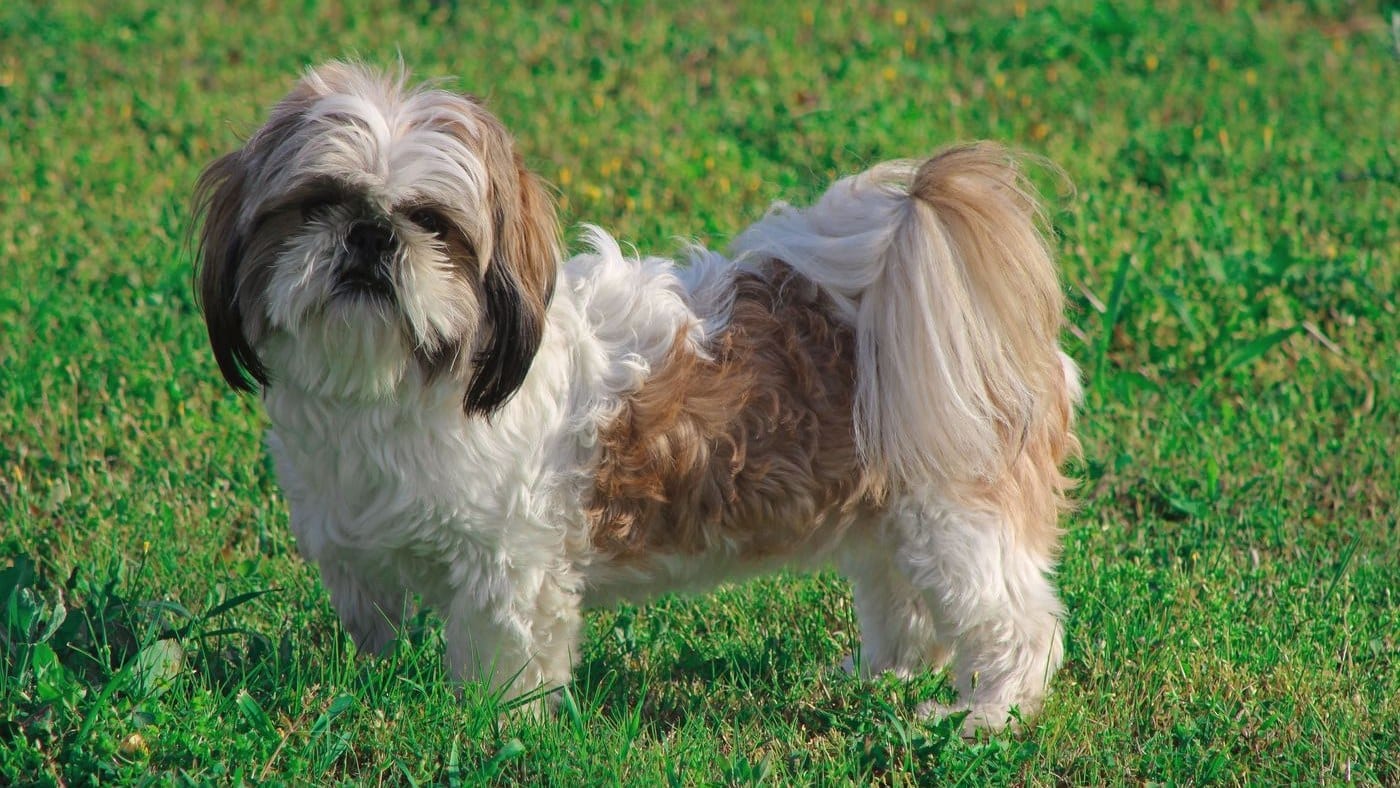
- Height: up to 27 cm at the withers
- Weight: 4.5–8 kg
- Body: longer than tall, sturdy, with a broad chest
- Coat: long, dense, straight, with an undercoat; it reaches the ground
- Colour: any colour is accepted; in parti-colours a white blaze on the head and a white tail tip are desirable
- Head: round, with a short nose and hair growing outwards from the face in all directions, like a chrysanthemum
- Lifespan: usually 10–16 years
How much exercise it needs
Half an hour to an hour a day, split into two or three shorter walks. Walking suits it better than running.
In hot weather, walk early and late — not at midday. A short nose means the dog cools itself by breathing far less efficiently than other breeds, and overheating comes on fast. It must never be left in a warm car, not even briefly — in a brachycephalic breed that does not end well.
Coat care — the main job with this breed
A Shih Tzu in full coat is brushed every day. Not every other day, not at weekends. The coat reaches the ground, has an undercoat and mats quickly.
Most owners therefore choose a shorter clip every 6–8 weeks. That is a perfectly legitimate solution: the dog is more comfortable, overheats less in summer and brushing then takes a few minutes.
- A mat is not brushed out. It hurts, the skin underneath becomes damp and inflamed, and the only answer is to clip it out.
- The hair above the eyes is either tied into a topknot or trimmed. Hair rubbing on the cornea is a common cause of inflammation.
- The area around the eyes and the beard is wiped daily — the eyes of this breed water a lot and the hair underneath stays wet.
- Hair in the ears and between the pads is kept short.
Feeding
An adult eats roughly 80–150 g of dry food a day in two meals. The breed puts on weight easily and every extra kilo makes breathing worse.
Teeth need particular attention. The Shih Tzu has an undershot jaw and crowded teeth in a short jaw, so tartar builds up faster. Brushing or dental chews are not a luxury here.
Common health problems
Most of the problems in this breed follow from the shape of its head. They are not rare exceptions — they are the things a good breeder raises without being asked.
- Brachycephalic obstructive airway syndrome — narrowed airways. It shows as snoring, noisy breathing and quick exhaustion in the warm. Mild forms do not limit life; severe ones are corrected surgically.
- Eye injuries — a prominent eye is vulnerable. Corneal ulcers, dry eye and, at worst, proptosis of the eyeball after a knock or a sharp pull on a collar. A harness is therefore a better choice than a collar in this breed.
- Patellar luxation — a slipping kneecap.
- Intervertebral disc disease — a consequence of the longer back; stairs and jumping off the sofa can be limited.
- Renal dysplasia — an inherited defect that shows in young dogs as increased thirst and weight loss.
- Tartar and gum disease — with crowded teeth this is the rule, not the exception.
What to ask the breeder: how the parents breathe after exercise, whether anyone in the line has needed airway surgery, and what the nostrils of the puppy look like. You want a dog with open nostrils and as little pushed-in muzzle as possible — in this breed that is the single most important thing you can see for yourself.
This is not a diagnostic guide. A cloudy or painful eye, noisy breathing at rest and sudden hind-leg weakness belong at the vet, quickly.
Anything else to consider
With a Shih Tzu, the grooming never ends. Daily brushing or a regular groomer, wiping the eyes, watching the teeth — that is a lifelong routine, not a puppy phase. Anyone who accepts that gets an undemanding and pleasant companion.
One practical note: grooming is a recurring cost, just as it is with a Poodle. It belongs in the budget from the start.
Want one?
99 kennels here breed it. Each one has a contact and a link to its page.
Who breeds this
- ... von AstinollaLeimen, Germany
- ...vom WachbühlBad Wurzach, Germany
- ABIBELPoland
- AKITANARINasielsk, Poland
- ANGELSTAFFPoland
- ASTRAPoland
- BAJKOWA ZAGRODAPoland
- BIG LITTLE DOGSPoland
- BŁĘKITNY BLASKPoland
- BLUE GARDENPoland
- BOCIANOWOPoland
- CHANEL FAMILYPoland
- CROWN PUPPIESPoland
- CUDAKI-PSIAKIPoland
- CUTE ANGELSPoland
- CZARNA SUZAPoland
- CZEKOLADOWE I SŁODKIEPoland
- EMERALD DREAMPoland
- EMILIANOPoland
- EMPIRE SHIH-TZUPoland
- FERREROPoland
- FOREST BORDERSPoland
- FRUGOKępno, Poland
- FUNNY TEDDYPoland
- FUTRZASTE SŁODZIAKIPoland
- GIERAPoland
- GRZYBKOWA DOLINAPoland
- GUARDIAN OF TYBETRawa Mazowiecka, Poland
- HAPPY PACKPoland
- HOLYNÓWKAPoland
- JAGAPoland
- JARO ADAMPoland
- JEZIORAKPoland
- JULECZKAPoland
- JULIAPoland
- KALIAPoland
- KAMIENNE WZGÓRZEPoland
- KARATPoland
- KASPATIPoland
- KATARINAPoland
- KIRAPoland
- KRÓLESTWO LIPOWEJPoland
- KUDŁATE MISIEPoland
- LA BONITAPoland
- LA SILVERS CATS*PLPoland
- LAUBERTPoland
- LAURENPoland
- LAVIPoland
- LAWENDOWA CHATKAPoland
- LOLA-ANNAPoland
- M & K CHMURKAWola Rasztowska, Poland
- MAŁY LEWPoland
- MARTITAPoland
- MASHA LANDPoland
- MELOVE LOVEPoland
- MIKO-FIGULANDIAPoland
- MIŁOŚĆ W RUDYCH ŁAPKACHPoland
- MISHKI HOME BREEDINGPoland
- MORDKAPoland
- MORSKIE OKOPoland
- MUZAPoland
- NA OSIEDLU PÓŁNOCNYMPoland
- NA WOLNOŚCIPoland
- nad Brzegiem Narwi FCIDzbenin, Poland
- NELOVE PSIAKIPoland
- NOCNE CHRAPUSIEPoland
- OF SILVER WITCHPoland
- PIESKI U EWKIPoland
- POLSKI DOGPoland
- PROMYCZEKPoland
- PSI OLIMPPoland
- PSIA ARIAPoland
- PSIA KOŚĆPoland
- PTYSIOWOPoland
- PUCHATE ŁAPKIPoland
- PUPILOWY AZYLPoland
- PUSIA URWISKAPoland
- ROSA HAUSEPoland
- Saltare Lux FCIBydgoszcz, Poland
- SEVEN HEAVENPoland
- SFORA ZNAD JEZIORAPoland
- SHIH-TZU HOUSEPoland
- SŁONECZNY PAGÓREKDziałoszyce, Poland
- SROCZKIPoland
- STADO PIESZCZOCHPoland
- STAR EWOKIPoland
- STARS LESSENPoland
- SWEET BALLSPoland
- TOFIKOWE LANDRYNKIPoland
- TUPTUSIOWA POLANAPoland
- TYBETAŃSKI RAJPoland
- UNIKALNA PRACOWNIAPoland
- WĘDOŁOWE WZGÓRZAPoland
- WERA FRIENDPoland
- WESOŁE STADO JONKWISZAPoland
- WOJNOWSKI PSI RAJPoland
- WSPANIAŁY SZCZENIAKPoland
- Z KARMELOWEJ GÓRKIPoland
- Z KRAINY WYGASŁYCH WULKANÓWPoland
Breeders by region
The number shows how many breeders in the region keep this breed.
- mazowieckie (Poland)15
- dolnośląskie (Poland)11
- zachodniopomorskie (Poland)11
- pomorskie (Poland)10
- wielkopolskie (Poland)10
- łódzkie (Poland)7
- lubuskie (Poland)6
- warmińsko-mazurskie (Poland)6
- małopolskie (Poland)5
- świętokrzyskie (Poland)5
- podkarpackie (Poland)3
- podlaskie (Poland)3
- śląskie (Poland)3
- Baden-Württemberg (Germany)1
- lubelskie (Poland)1
Breeders of this breed also keep
From the blog
- How to report animal crueltyA dog on a short chain with no water. A cat shut in an empty flat. Most people see something like this once and do not know who to call — and by the time they find out, they have talked themselves out of it. This guide is here so that does not happen.
- Adopting from a shelter: how it really worksFrom the first enquiry to the first week at home. Why the shelter asks so many questions, what a home check is for, and what to expect in the first three weeks.
- What the first year with a dog or cat really costsEveryone budgets for food and a bed. What breaks the budget is one item nobody expects — and costs that are not measured in money at all.