Yorkshire Terrier
A small dog with a terrier temperament — bold, loud and convinced it is much bigger. It suits a flat by size, not by temperament: a Yorkie needs training and exercise like any other dog, only in a smaller package.
- Species:
- dog
- Origin:
- United Kingdom
- Breeders here:
- 181
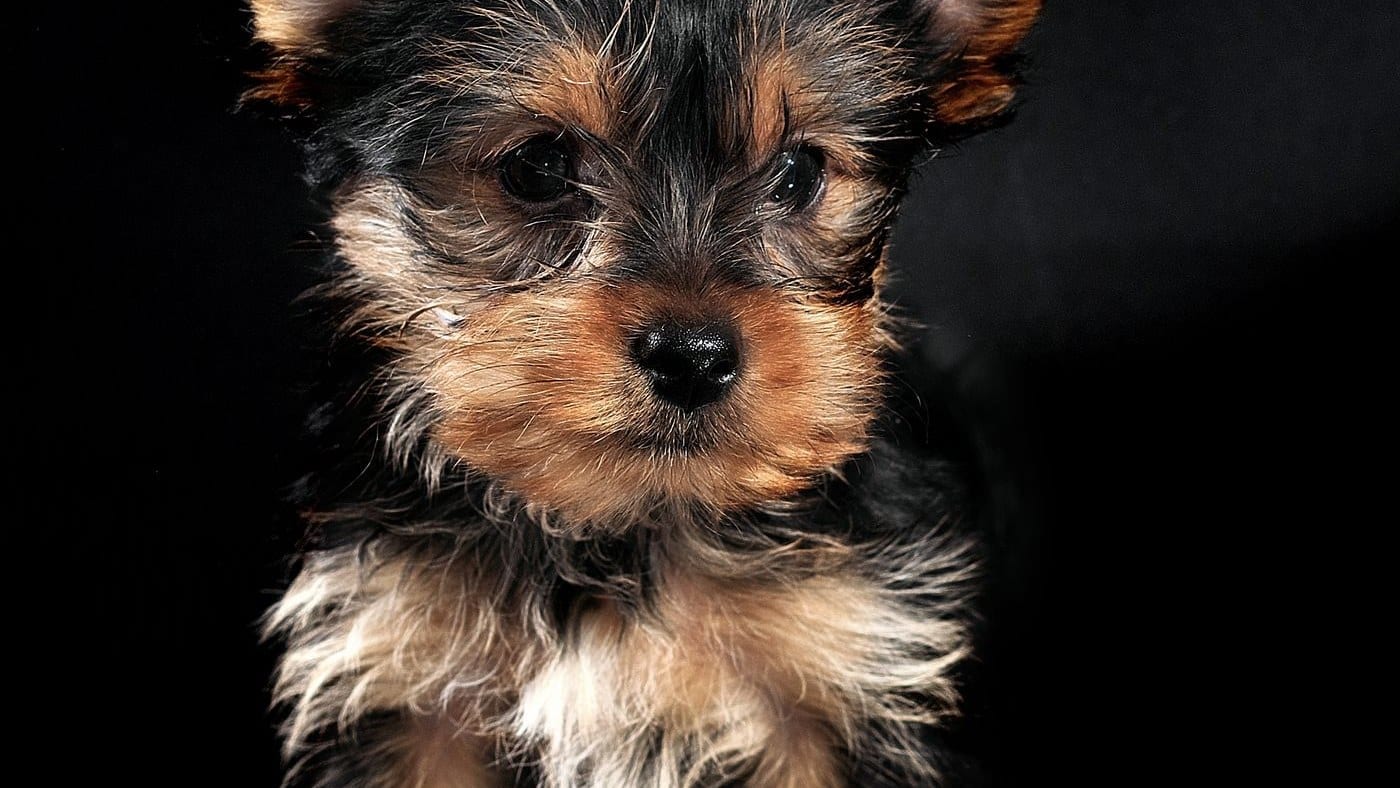
Who it suits
Someone who wants a small dog and is willing to train it like a big one. The Yorkie is lively, clever and strongly attached to its family; it can be at home all day provided someone gives it time.
It does not suit a household expecting a quiet lapdog. It is a terrier — it was originally used on rats in the mills — and that means voice, courage and a desire to chase things.
The commonest mistake with this breed is forgiving it everything because it is small. A dog that barks at everyone and will not let anyone touch it is not charming; it is an untrained dog that happens to weigh three kilos.
What it looks like
- Height: around 20–23 cm at the withers
- Weight: up to 3.2 kg under the standard
- Coat: long, straight and silky, with no undercoat — it grows continuously, like human hair
- Colour: steel blue over the back and golden tan on head, chest and legs; puppies are born black and the colour develops over years
- Lifespan: often 13–16 years, among the longest-lived breeds
Be wary of mini and teacup Yorkies. They are not varieties of the breed; the standard does not recognise them. They are dogs below the limit of healthy size, and they often have serious liver, bone and dental problems. A premium for a smaller dog is a premium for a shorter life.
How much exercise it needs
Three quarters of an hour to an hour a day is enough, but it has to be outdoors. A flat is not sufficient for a small dog — it needs smells, varied ground and other dogs as much as a large breed does.
Do not be misled by the fact that it tires itself out indoors. Mental work — scent games, simple tricks — settles it more than running does.
Coat care
This is the main daily job with this breed, and people underestimate it.
- Long coat is combed every day. Without that, mats form within two days and have to be cut out.
- A shorter clip every two or three months is entirely appropriate for a pet and saves a great deal of time. Long coat is a matter for shows, not for health.
- The coat does not shed — hair does not end up on the sofa, and that is precisely why it has to be trimmed.
- Hair around the eyes and on the paws needs keeping short.
Feeding and teeth
An adult eats roughly 60–100 g of dry food a day in two meals. At three kilos of body weight every extra treat counts — ten grams of cheese is, proportionally, a full meal for a Yorkie.
Teeth are the number one weakness in small breeds. Tartar, gum disease and early tooth loss are routine in Yorkies. Brushing at home and dental checks pay off more here than in large dogs.
Puppies often have retained deciduous canines that have to be extracted — otherwise they push on the adult teeth.
Common health problems
- Patellar luxation — a slipping kneecap, typical of small breeds. It shows as hopping on three legs.
- Tracheal collapse — the cartilage of the windpipe weakens in small breeds; it shows as a dry, honking cough. Hence a harness, not a collar.
- Portosystemic shunt — a congenital abnormality of the blood vessels around the liver, more common in this breed. The puppy fails to gain weight and is dull after meals.
- Legg-Calvé-Perthes disease — degeneration of the femoral head in young dogs.
- Low blood sugar in puppies — tiny puppies must eat more often or they risk hypoglycaemia.
- Tartar and gum disease — the commonest problem of all.
This is not a diagnostic guide. A dog that coughs, hops on three legs or is listless after meals belongs at the vet.
Anything else to consider
A Yorkie lives fifteen years or more. It is a longer commitment than most large breeds — and the last of those years usually come with dental and joint costs.
One more practical point: at three kilos, cold is a genuine problem. A coat for a small dog is not a fashion accessory; in a breed without an undercoat it is a necessity.
Want one?
181 kennels here breed it. Each one has a contact and a link to its page.
Who breeds this
- ... from blue moonFraureuth, Germany
- ... of black velvetFraureuth, Germany
- ... of golden BlushMainleus, Germany
- ... of Jasmin's sunny hillWölsendorf bei Schwarzach, Germany
- ... vom TannenhölzchenSeegebiet Mansfelder Land, Germany
- ...vom Home of HarmonyDietenhofen, Germany
- AD HOCPoland
- ALFPoland
- ALLEVAMENTOPoland
- AMBER STARSPoland
- ARNIPoland
- ATOMICPoland
- B. Samoha FCIBydgoszcz, Poland
- BAM-YORKNysa, Poland
- BANDA GAZOLAPoland
- BEE-BEEPoland
- BELLISSIMAPoland
- BELLISSIMO CANEPoland
- BIAŁY PAZURPoland
- Biewer YorkshireclownsBlumau, Austria
- BIRCHES WITH TATARYPoland
- BLACK AND SILVER DREAMPoland
- BLACK DIAMONDSPoland
- BLACK ROSEPoland
- BLOK YORKPoland
- BLU NUMBER ONEPoland
- Blue One10715 Berlin, Germany
- BRIGHT STAR YORKIESPoland
- BUKOWSKIE TERRIERYPoland
- BURSZTYNOWY BLASKPoland
- CANDYPoland
- Cappuccino`s31171 Nordstemmen, Germany
- CELEBRYTKIPoland
- COCO BANDOŚrem, Poland
- CRYSTAL ANGELPoland
- CRYSTAL HERDPoland
- DE LUXE MIRACLEPoland
- DĘBICKA PERŁA YORKÓWPoland
- Des Rosiers (VDH)Blankenheim, Germany
- DIAMENTOWE OGONKIPoland
- DOG'S DREAMSPoland
- DULCE GAUDIUMPoland
- ELIZAPoland
- EMILYPoland
- ENOLA MAŁA SŁODYCZPoland
- FANTASTIC DOGSPoland
- FEVIXPoland
- FIGA Z MAKIEMPoland
- FINPoland
- FREESTYLEPoland
- from color Rainbow45665 Recklinghausen, Germany
- from Littlefoot (VDH)Gelsenkirchen, Germany
- GANG ALBANY I MARGOLIPoland
- GOLD ROSEPoland
- GRACINAPoland
- HAPPY PETSPoland
- Hippoland`s01723 Herzogswalde, Germany
- HODOWLA KAJRUSEKPoland
- HODOWLA LOL SURPRISEKoszalin, Poland
- Home of Bird...Schraplau, Germany
- JOLZAPoland
- KALYMBAPoland
- KEIKOPoland
- KOKO YORK'SPoland
- KRAINA MAŁYCH ŁAPEKPoland
- KRYNOXPoland
- KSIĘŻYCOWA NADZIEJAPoland
- KSIĘŻYCOWE YORKIPoland
- L'AMORE YORKPoland
- LA LOCAPoland
- LA LUNAPoland
- ŁACIATA GROMADAPoland
- LAETATIOPoland
- LILILANDPoland
- LITTLE MAGIC STARPoland
- LITTLE SWEET DREAMPoland
- LUCY YORKPoland
- LUNA AZAPoland
- LUSIA'S HEARTPoland
- MADAM LADYPoland
- MADE IN HEAVENPoland
- MAGIA YORKÓWPoland
- MAŁE PEREŁKIPoland
- MALI AGENCIPoland
- MAŁY DIAMENCIKPoland
- MARGISOLPoland
- MEGIPoland
- MEXICANOS BANDOLEROSPoland
- MI ESTRELLAPoland
- MIL-YORKPoland
- MIŁOŚĆ DO YORKÓWPoland
- MIMIPoland
- MIMI ALKMAPoland
- MINI PEREŁKAPoland
- MY DREAMPoland
- MY LITTLE PRINCESSPoland
- MY LITTLE PUSIOPoland
- NASZA PERŁAPoland
- NEW HEAVENPoland
- No Limit`s59425 Unna, Germany
Showing the first hundred. The rest are in the breeder directory.
Breeders by region
The number shows how many breeders in the region keep this breed.
- mazowieckie (Poland)30
- dolnośląskie (Poland)27
- śląskie (Poland)24
- wielkopolskie (Poland)14
- małopolskie (Poland)11
- podkarpackie (Poland)7
- warmińsko-mazurskie (Poland)6
- łódzkie (Poland)5
- opolskie (Poland)5
- podlaskie (Poland)5
- pomorskie (Poland)5
- Bayern (Germany)4
- lubuskie (Poland)4
- kujawsko-pomorskie (Poland)3
- Nordrhein-Westfalen (Germany)3
- Berlin (Germany)2
- Rheinland-Pfalz (Germany)2
- Sachsen (Germany)2
- Sachsen-Anhalt (Germany)2
- świętokrzyskie (Poland)2
Breeders of this breed also keep
From the blog
- How to report animal crueltyA dog on a short chain with no water. A cat shut in an empty flat. Most people see something like this once and do not know who to call — and by the time they find out, they have talked themselves out of it. This guide is here so that does not happen.
- Adopting from a shelter: how it really worksFrom the first enquiry to the first week at home. Why the shelter asks so many questions, what a home check is for, and what to expect in the first three weeks.
- What the first year with a dog or cat really costsEveryone budgets for food and a bed. What breaks the budget is one item nobody expects — and costs that are not measured in money at all.