German Shepherd Dog
One of the most widely kept dogs in Europe. Clever, willing to work and strongly bonded to its person — but it needs a job, not just a walk. If it does not get one it will find its own, and the owner will not like it.
- Species:
- dog
- Origin:
- Germany
- Breeders here:
- 90
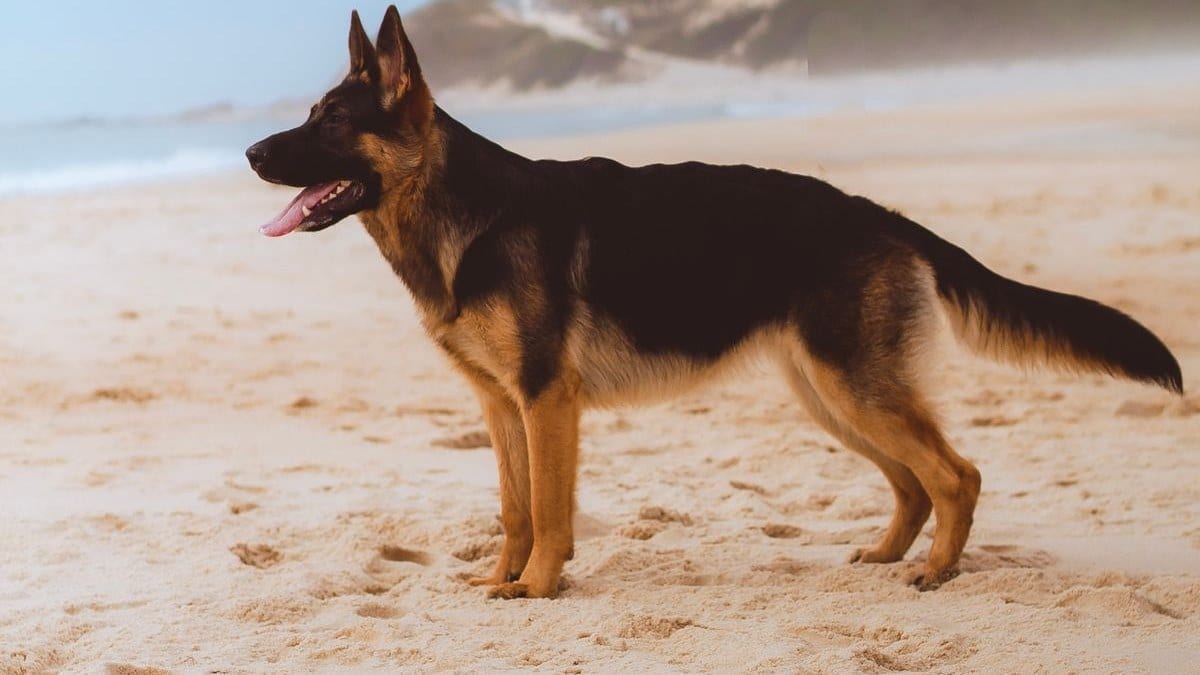
Who it suits
Someone who wants to do things with a dog. The German Shepherd was bred to work and that need remains — the question is not how many kilometres it covers but how much it has to think about. An hour of obedience, scent work or tracking tires it more than a three-hour walk.
It does not suit someone who is at work all day and wants peace in the evening. A bored Shepherd starts guarding things it should not guard, barking at every noise behind the door and chewing the furniture. That is not malice, it is an unemployed working dog.
What it looks like
- Height: dogs 60–65 cm, bitches 55–60 cm at the withers
- Weight: dogs 30–40 kg, bitches 22–32 kg
- Coat: both a short and a long variety, both with a dense undercoat
- Colour: most often black and tan, also sable and solid black
- Lifespan: usually 9–13 years
Two lines are bred within the breed, and it is worth knowing about before choosing a puppy: show dogs tend to have a more sloping croup, working dogs have a more level build and tend to be more driven. For an ordinary family, a working line is often more dog than expected.
How much exercise it needs
Count on two hours a day, of which at least half an hour should be something the dog has to think about. Running alone will not settle it — on the contrary, it builds stamina, so next time the dog needs more.
A puppy in its first year must not be overloaded. Long runs beside a bike, jumping and stairs in the first year damage joints that have not finished growing.
Training and the first months
It learns fast and willingly — its greatest asset and its trap. It learns equally fast the things you did not mean to teach it: that barking gets results, that pulling on the lead moves you forward faster.
- Socialisation before four months matters more in this breed than in most. The Shepherd is naturally watchful towards strangers, and whatever it does not learn as a puppy will look suspicious to it as an adult.
- Consistency before severity. It responds badly to harsh handling — it either shuts down or stands up to you.
- Training classes are not a luxury. With a thirty-five-kilo dog that has decided a visitor may not come in, it is too late for training.
Feeding
An adult eats roughly 300–450 g of dry food a day depending on size and workload, split into two meals. One large meal a day raises the risk of gastric torsion in a big dog.
Puppies grow fast, and large-breed puppy food deliberately contains less calcium and energy — faster growth is not better growth; it strains the joints. Keep the dog quiet for at least an hour after eating.
Common health problems
This is why, with a Shepherd, it pays to choose the breeder rather than the price.
- Hip and elbow dysplasia — inherited and widespread in the breed. The parents must have scored radiographs; a breeder who will not show them has answered the question.
- Degenerative myelopathy — progressive paralysis of the hindquarters in later life. A DNA test exists.
- Gastric torsion — an acute, life-threatening emergency typical of large deep-chested breeds.
- Exocrine pancreatic insufficiency — it shows as weight loss on a normal food intake.
- Sensitive skin and ears, particularly in allergic individuals.
This is not a diagnostic guide. If you can see something wrong with the dog, it belongs at the vet, not on the internet.
Anything else to consider
The Shepherd sheds all year round and heavily twice a year. Anyone who cannot live with hair on their clothes should choose another breed — vacuuming will not solve it.
And a last point people only ask about late: this is a dog that is hard to leave with anyone. Either you take it on holiday with you, or you need someone it already knows.
Want one?
90 kennels here breed it. Each one has a contact and a link to its page.
Who breeds this
- 1.Private Hundeschule u.-PensionTernitz, Austria
- AKACJOWE WILKIPoland
- AKACJOWE ZACISZEPoland
- AS-FARMPoland
- AZANOWA GROMADAPoland
- BAK-DOGPoland
- BARTOSZOWE WILKIPoland
- BIAŁY KIEŁPoland
- BLACK WORLDPoland
- BRAMECKIE ZBÓJEPoland
- BRZOZOWE WZGÓRZEPoland
- BURSZTYN DOGPoland
- CHAKVILLENowa Iwiczna, Poland
- CZARNA WATAHAPoland
- DAMBOPoland
- DARAMAPoland
- DARK WILCZURPoland
- DĘBOWY LASPoland
- DORISPoland
- EMASCULATORPoland
- EVELINEPoland
- GRABOŚ-GOŁYMINPoland
- HODOWLA PRZY LESIEPoland
- HORANDPoland
- KIKI SOCHOCIŃSKI LASPoland
- KLEOFASPoland
- KRUSZEWSKIE WILKIPoland
- LACERTA FELISPoland
- LEŚNE PSIAKIPoland
- LEŚNE ZMORYPoland
- MAGIC YORKPoland
- MAGNUSPoland
- Mbm-Leistungszucht FCIBydgoszcz, Poland
- Mistrza JanaBydgoszcz, Poland
- MŁODE WILKIPoland
- MOI PRZYJACIELE NA 4 ŁAPYPoland
- MUSTAFA KINGPoland
- NIEUSTRASZONY WILKPoland
- OD POLI ZE ŚRÓDMIEŚCIAPoland
- OWCZARKOWE SZCZĘŚCIEPoland
- OWCZARKOWI POECIPoland
- PEREŁKI ZNAD MORZAPoland
- PERROS LOCOSPoland
- RADOSNE PIESKIPoland
- RUDA WIELKAPoland
- SFORA ZNAD WIEPRZAPoland
- SPOD BOCIANIEGO GNIAZDAPoland
- ŚWIERKOWEGO LASU WATAHAPoland
- SZTABKIPoland
- TALKING BENPoland
- TĘCZOWA WILCZA GÓRKAPoland
- vom AriovistEssen, Germany
- vom Delta Centauri FCIBydgoszcz, Poland
- Vom Edlen SteinBydgoszcz, Poland
- vom GeisterschlossWeiz, Austria
- VOM HAUSE BIEBERSTEINPoland
- vom MessinaMistorf, Germany
- vom RuhrparkRot an der Rot, Germany
- vom SatansthronGrebs-Niendorf, Germany
- vom SteinbuschKraftsdorf, Germany
- von ConnefordeWiefelstede, Germany
- von der ClaudinenburgGroßhabersdorf, Germany
- von der LisztBlankensee, Germany
- von der Medbacher MühleHöchstadt, Germany
- von der Piste TropheSchwandorf, Germany
- von der Stadt MosbachViernheim, Germany
- von SendlingGeretsried, Germany
- von-UnduchtHelmenzen, Germany
- WATAHA Z KACZAWKIPoland
- WATAHA Z ŻERKOWICPoland
- WICHROWE WZGÓRZAPoland
- WILCZA KOLONIAPoland
- WILCZA OSADAPoland
- WILCZA POLANAPoland
- WILCZE SERCA Z MAZOWSZAPoland
- WILCZY SYNDYKATPoland
- WILKI Z HOROWEJ GÓRYPoland
- WOLF GARDENPoland
- YOUNG WOLFPoland
- Z GANGU CZARNYCHPoland
- Z KONWALIOWEJ WYSPYPoland
- Z MOKREGO WZGÓRZAPoland
- Z ORZESZKOWEJPoland
- Z PŁAZOWSKIEJ DOLINYPoland
- Z POD ZIELONEGO DACHUPoland
- Z WILCZEGO DOMUPoland
- Z WILCZEJ KRWIPoland
- Z ZAGRODY U JANDULAPoland
- z Zakątka przy Rzecznej (FCI)Bydgoszcz, Poland
- zu den Grauen BirkenGarrel, Germany
Breeders by region
The number shows how many breeders in the region keep this breed.
- mazowieckie (Poland)20
- wielkopolskie (Poland)9
- zachodniopomorskie (Poland)8
- kujawsko-pomorskie (Poland)5
- dolnośląskie (Poland)4
- lubelskie (Poland)4
- warmińsko-mazurskie (Poland)4
- Bayern (Germany)3
- lubuskie (Poland)3
- śląskie (Poland)3
- łódzkie (Poland)2
- Mecklenburg-Vorpommern (Germany)2
- Niedersachsen (Germany)2
- opolskie (Poland)2
- podlaskie (Poland)2
- Rheinland-Pfalz (Germany)2
- Baden-Württemberg (Germany)1
- Hessen (Germany)1
- małopolskie (Poland)1
- Niederösterreich (Austria)1
Breeders of this breed also keep
From the blog
- How to report animal crueltyA dog on a short chain with no water. A cat shut in an empty flat. Most people see something like this once and do not know who to call — and by the time they find out, they have talked themselves out of it. This guide is here so that does not happen.
- Adopting from a shelter: how it really worksFrom the first enquiry to the first week at home. Why the shelter asks so many questions, what a home check is for, and what to expect in the first three weeks.
- What the first year with a dog or cat really costsEveryone budgets for food and a bed. What breaks the budget is one item nobody expects — and costs that are not measured in money at all.